


When people hear “health checkup,” they often imagine a quick blood test or a short doctor visit.
But in Japan, there’s a system called Ningen Dock—a comprehensive, full-body screening designed to detect diseases early and understand your health before symptoms appear.
So what do you actually learn from it?
1. What You Can Learn from a Ningen Dock
A Ningen Dock gives you a complete picture of your body, not just one aspect.
It typically includes:
Body composition (weight, BMI, visceral fat)
Blood tests (cholesterol, liver, kidney, glucose)
Heart and lung function (ECG, X-ray, breathing test)
Urine and stool analysis
Imaging (CT, ultrasound)
Eye and hearing tests
Infection and inflammation markers
What’s unique is that everything is combined into one report, and instead of just numbers, you also get clear judgments and recommendations.
Example of What the Results Look Like
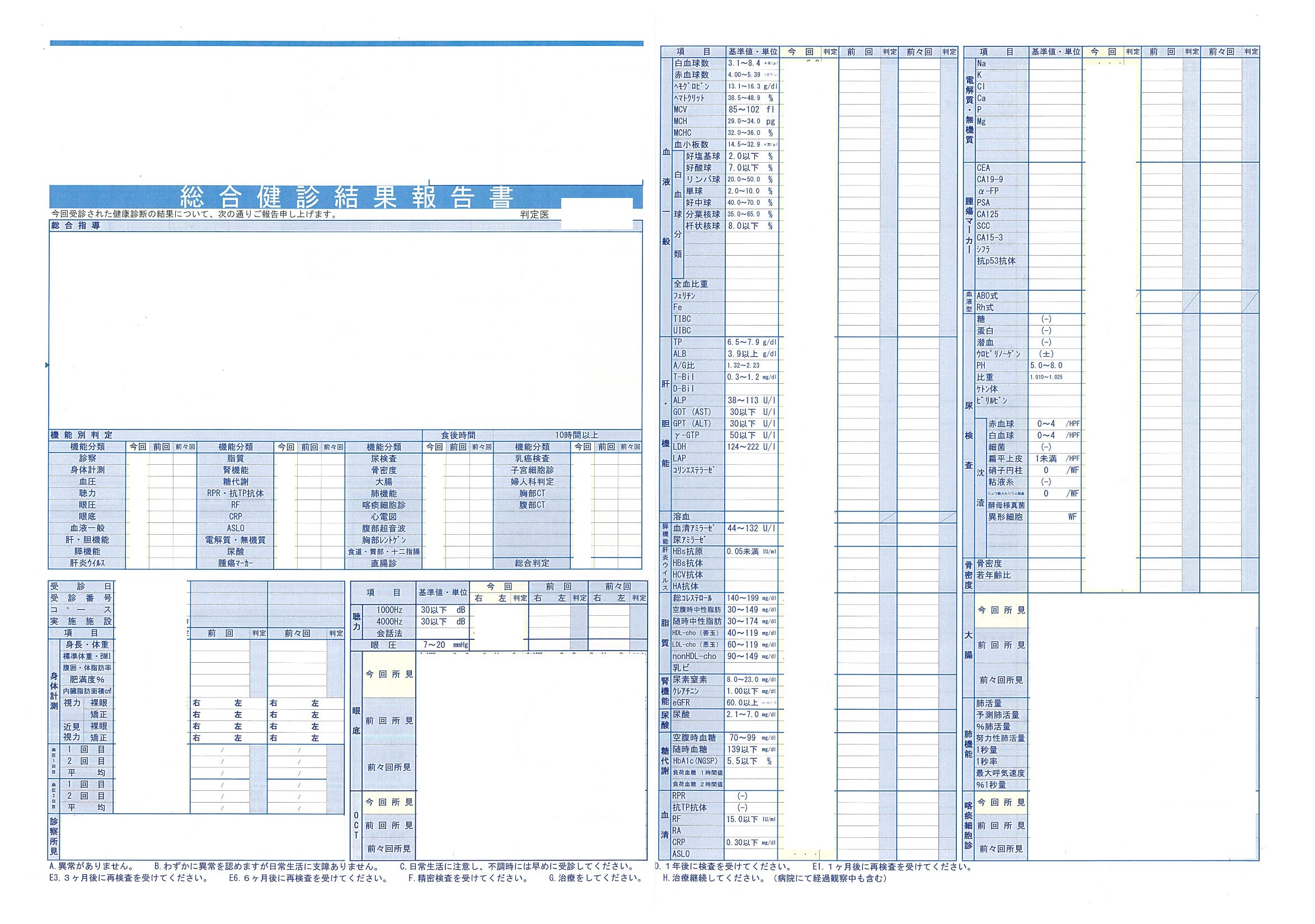
Here is an example of the type of report you receive:
Each category (blood, liver, heart, etc.) is graded (A–G)
You see both your actual values and the reference range
Doctors include comments and next steps
At first glance, it can look overwhelming—but once you understand how to read it, it becomes incredibly insightful.
Also, at MEDICAL CHECKUP JAPAN CONCIERGE, we hand out the English translation to you.
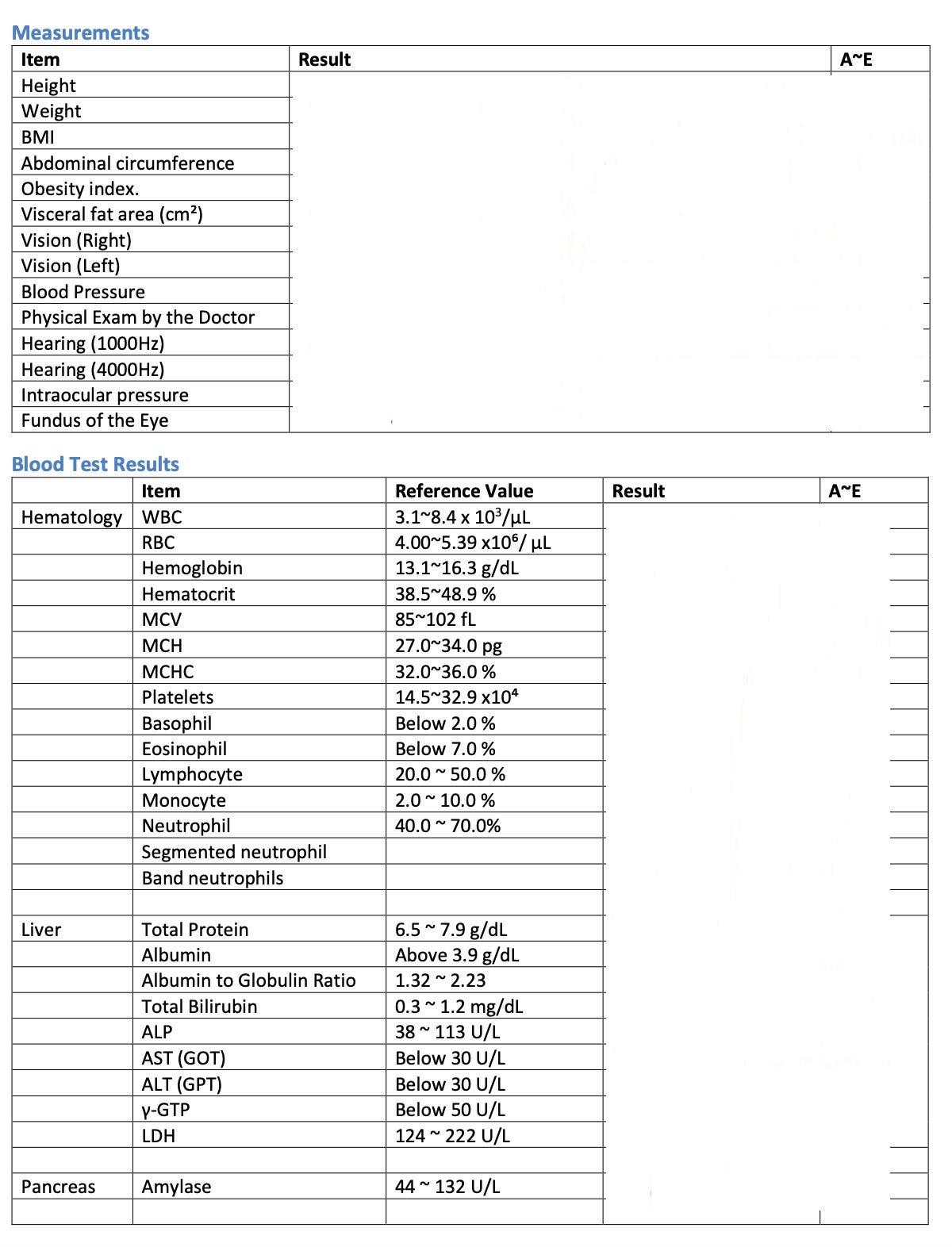
2. What the Tests Actually Mean (Partly Explained)
Instead of just listing numbers, here’s how to actually think about them:
🩺 Body Composition & Metabolic Health
BMI (Body Mass Index) → a rough indicator of weight balance
Around 22 is considered ideal in Japan
25+ suggests increased metabolic risk
Waist circumference / visceral fat
→ more important than weight alone
→ directly linked to diabetes and cardiovascular disease
👉 Even if your weight looks “normal,” internal fat can tell a different story.
🩸 Cholesterol & Lipids (Heart Health)
LDL (bad cholesterol) → builds up in blood vessels
HDL (good cholesterol) → helps remove excess cholesterol
👉 High LDL over time increases risk of:
Heart attack
Stroke
Atherosclerosis
But what’s important is:
It’s not just “good or bad”—it’s about long-term trends.
🍬 Blood Sugar & Metabolism
Glucose → your current blood sugar
HbA1c → your average blood sugar over the past 1–2 months
👉 These help detect:
Prediabetes
Diabetes risk
🚽 Urine & Stool Tests
Urine → kidney function, hydration, metabolic balance
Stool (occult blood test) → detects tiny amounts of blood you can’t see
👉 This is especially important for:
Early detection of colon issues
Cancer screening
👁 Vision (How to Read the Numbers)
Vision is measured as a decimal:
1.0 = standard “normal” vision
0.5–0.7 = mild reduction
<0.3 = more significant impairment
👉 So if you’re at 0.5–0.6, it means:
You can still function normally
But your vision is not fully sharp
I’ll be breaking down more of these individual markers in future newsletters—including how to interpret them and what to actually do with the results—so feel free to subscribe if you’d like to go deeper.
3. What I Personally Learned from My Checkup
I recently did Ningen Dock in my mid-20s.
Overall, I was healthy—but the details were the most valuable part.
Cholesterol — “normal” but not optimal
My total cholesterol:
Reference: 140–199 mg/dL
Mine: 186 mg/dL (A judgment)
So yes—completely normal.
But at the same time, it’s closer to the higher end.
My LDL:
Reference: 60–119 mg/dL
Mine: 95 mg/dL
Again, normal—but I’d still like to optimize it further.
👉 That’s the key mindset shift:
Even within “normal,” there’s room to improve.
Vision — something I knew, but needed to address
I already had a feeling my vision wasn’t great—and the test confirmed it.
My results were:
0.6 and 0.5 (with contact lenses)
Which means:
I can function fine in daily life
But my vision isn’t fully sharp or optimal
Seeing it clearly quantified made me realize:
This isn’t just something to “live with”—it’s something I should properly correct.
In my case, it made me think about updating my glasses or contact lenses, rather than continuing with something that isn’t giving me full clarity.
🧪 Amylase — a subtle signal
My amylase level was slightly elevated.
Right now, I have no symptoms—but the recommendation was:
If you develop abdominal pain, follow up with a doctor.
👉 What stood out to me:
Even small findings are not dismissed—they’re tracked and contextualized.
Final Takeaway
What makes Ningen Dock powerful isn’t just the number of tests.
It’s how everything is connected:
Data → Interpretation → Action
Even as someone young and healthy, I came away with:
A clearer understanding of my body
Small but important areas to improve
A more proactive approach to health
If you’re curious how this works as an international visitor:
👉 https://www.japanwellnesstravel.com/p/ningen-dock-japan-for-foreigners
Ready to Book Your Ningen Dock in Japan?
This time, I had my Ningen Dock at IMS MeLife Clinic Ikebukuro.
It’s a very “Japanese-style” luxury clinic—calm, quiet, and thoughtfully designed with natural wood and greenery. The entire experience felt smooth and relaxing, which made the checkup itself much more comfortable.
If you’re interested in taking a Ningen Dock like this, feel free to contact me through the website.

MEDICAL CHECKUP JAPAN CONCIERGE is here to make the entire process seamless—from choosing the right package to fully understanding your results.
📧 Email: info@japanwellnesstravel.com
🌐 Website: www.medicalcheckupjapan.com
👉 Start with a free 30-minute health consultation
Share your health concerns, travel dates, and goals—we’ll take care of everything else.
Because your health is not a luxury.
It is the foundation of everything.
I was a graduate student in Japan. I woke up with an eye infection one morning and one of my lab mates took me to the local eye doctor. The lady not only checked my eye but also checked my glasses to make sure I was wearing the right prescription. That visit lives rent free in my mind years later.
The ningen dock is such a good example of the Japanese approach to health as ongoing maintenance rather than crisis response. The whole system is built on the assumption that you should understand your body before something goes wrong — which is a fundamentally different relationship with medicine than most Western healthcare encourages. The amylase detail is interesting too, small findings tracked and contextualized rather than dismissed.