

A Patient I Can Never Forget
It was during my hospital rotation — my forth year of medical school — when I met Mr. T. He was 58 years old, a company executive who had been “too busy” for checkups his whole life. He came in because his back had been hurting for a few weeks.
The imaging results shook me to my core: Stage IV colon cancer. He had maybe six months.
What haunted me wasn’t the diagnosis itself. It was what the attending physician said afterward, almost to himself:
“If he’d done a ningen dock five years ago, we might have caught this.”
That sentence has never left me.
I’ve been practicing medicine in Japan for years now, and I can tell you — the number of patients I see who arrive too late is heartbreaking. Advanced cancers. Severe cardiovascular disease. Strokes that didn’t need to happen. And in almost every single case, I find myself thinking: this could have been caught earlier.
Japan has a system specifically designed to prevent this tragedy. It’s called ningen dock, and it is, without exaggeration, one of the most extraordinary preventive healthcare tools in the world.
The shocking part? Most foreigners have never heard of it.
Until now.
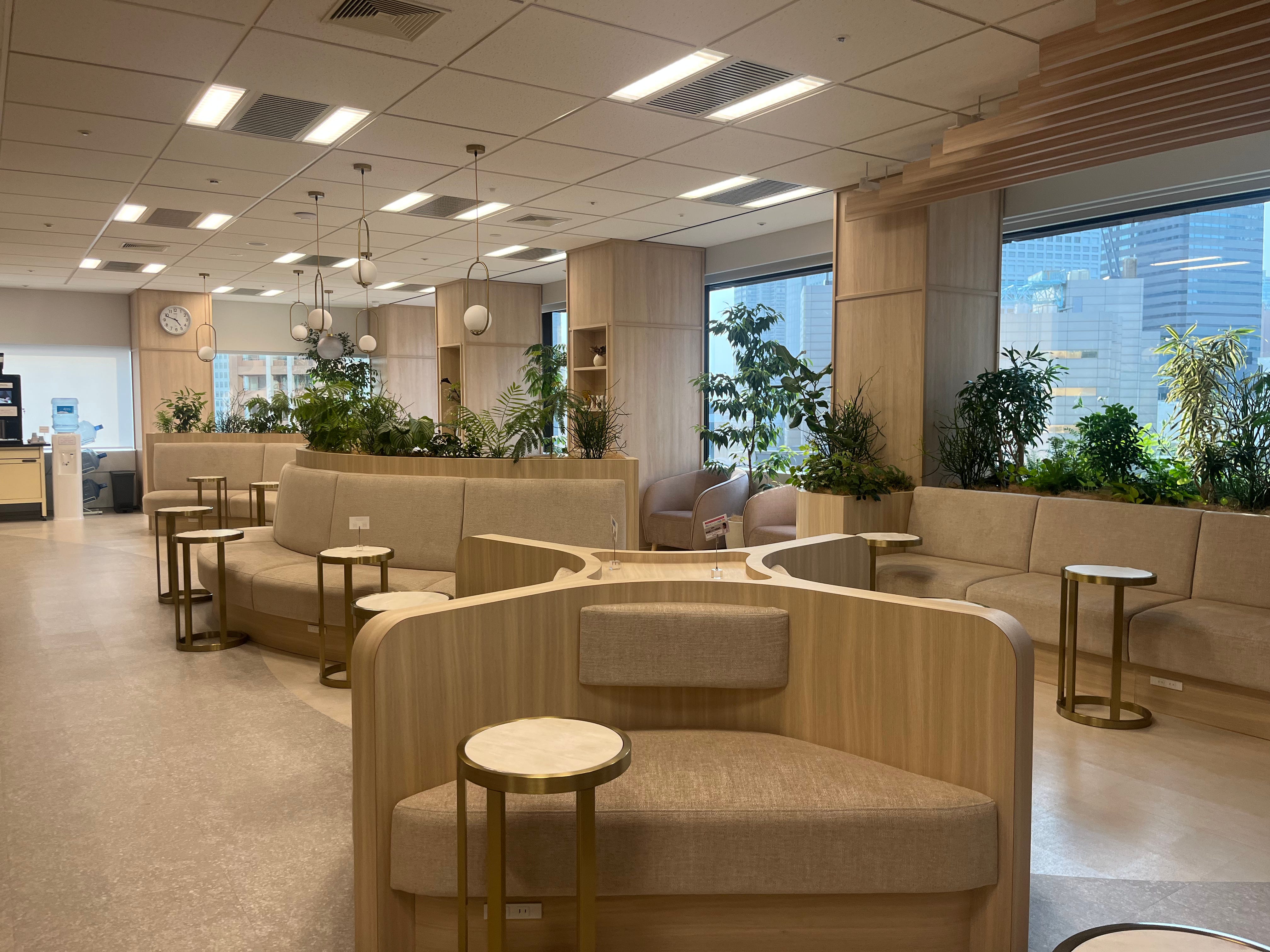
What Is Ningen Dock? Japan’s Revolutionary Full-Body Health Checkup Explained
Ningen dock (人間ドック, pronounced “nee-gen doc-ku”) literally translates to “Human Dock.” The name is inspired by the concept of a ship dock — where a vessel goes in for a thorough inspection and maintenance check before heading back out to sea.
The analogy is perfect. Your body is the ship. Ningen dock is the inspection.
Developed in Japan in 1954 at the National Tokyo Daiichi Hospital, ningen dock was born out of a national health crisis: Japan was seeing surging rates of chronic illness, cancer, and cardiovascular disease. Rather than simply treating disease after it appeared, Japanese healthcare leaders made a bold decision — catch it before it starts.
Seventy years later, that decision has helped make Japan the country with one of the highest life expectancies on Earth: 84 years on average, approximately 6 years longer than the global average. PMC - National Center for Biotechnology Information
Today, ningen dock is offered at 1,727 facilities across Japan and involves approximately 3.7 million people annually. It is not just a medical service — it is a cultural institution. PMC
Why I Think Every Foreign Visitor to Japan Should Consider This
In the United States, a comparable battery of tests — if you could even find a clinic that offered them together — would run you way more, assuming your insurance didn’t fight you at every step. In Canada, you might wait 6 to 12 months just to get individual tests referred through your GP. In many other countries, several of these tests simply aren’t available to the general public at all.
In Japan, you show up for half a day. You leave with a complete picture of your health, explained to you by a doctor, in a clean, calm, state-of-the-art facility.
Growing up in Japan, I genuinely thought this was normal. It was only when I started communicating with foreign friends and colleagues that I realized: this is not normal. This is extraordinary.
Everything That’s Included in a Ningen Dock: The Full Breakdown
One of the most common questions I receive is: “But what exactly do they test?”
The answer is: a lot. Far more than most people expect. Here is a comprehensive overview of what a standard ningen dock package covers, along with optional add-ons:
🩸 Blood Analysis — Your Body’s Chemical Story
Complete Blood Count (WBC, RBC, hemoglobin, hematocrit, platelets)
Liver function (AST, ALT, γ-GTP, ALP, bilirubin, albumin)
Kidney function (creatinine, urea nitrogen, electrolytes)
Lipid panel (total cholesterol, HDL, LDL, triglycerides)
Blood sugar & HbA1c (diabetes screening)
Uric acid (gout)
Thyroid hormones (TSH, FT4)
Tumor markers (PSA for prostate, CA-125 for ovaries, CEA for colon/lung)
Hepatitis B & C, syphilis serology
🫀 Heart & Cardiovascular System
Resting ECG (electrocardiogram)
Stress ECG — detects circulation problems that don’t appear at rest
Echocardiogram (cardiac ultrasound — checks heart structure and valves)
Carotid artery ultrasound — measures vessel wall thickness, detects early hardening
Ankle-arm blood pressure index (ABI) — screens for peripheral artery disease
🧠 Brain & Neurological
Brain MRI — detects silent strokes, tumors, early abnormalities
Brain MRA (magnetic resonance angiography) — images blood vessels, detects aneurysms
🫁 Chest & Lungs
Chest X-ray
Chest CT scan (especially recommended for ages 40+)
Pulmonary function test — detects asthma, COPD, early lung disease
🍽️ Digestive System — Where Cancer Hides
Upper endoscopy (esophagus, stomach, upper small intestine) — looks for ulcers, H. pylori infection, early gastric cancer
Colonoscopy — full colon examination; polyps can be removed during the procedure
Abdominal ultrasound (liver, gallbladder, kidneys, spleen, pancreas)
MRCP (MRI of bile ducts and pancreas) — for suspected blockages
👁️ Sensory Evaluations
Vision acuity and intraocular pressure (glaucoma screening)
Hearing test
Ocular fundus examination (detects hypertensive and diabetic eye changes)
💧 Urine & Stool Analysis
Urine: specific gravity, pH, protein, glucose, occult blood, sediment, microalbumin
Stool: fecal occult blood (colorectal cancer screening)
👩 Women’s Health
Mammogram (ages 40+) or breast ultrasound (under 40)
Breast MRI for high-risk or dense breast tissue
Pap smear (cervical cancer screening)
Transvaginal ultrasound (uterus and ovaries)
Bone density measurement (osteoporosis screening)
⚙️ Optional Advanced Tests
Full-body MRI (head to pelvis — all organs in one scan)
PET-CT scan (whole-body cancer detection)
Genetic risk analysis
H. pylori breath test
HPV testing
As a doctor, I want to be honest with you: this is not a basic checkup. This is a diagnostic deep-dive that most people in most countries will never experience. And that is exactly why I think foreign visitors to Japan are missing a once-in-a-lifetime opportunity.
The Diseases Ningen Dock Can Catch — Before You Even Feel Them
This is the part that matters most to me as a physician.
The diseases that kill the most people globally — cancer, heart disease, stroke, diabetes — are almost universally silent in their early stages. By the time you feel them, treatment is often exponentially harder and more expensive.
Here is what ningen dock is specifically designed to detect early:
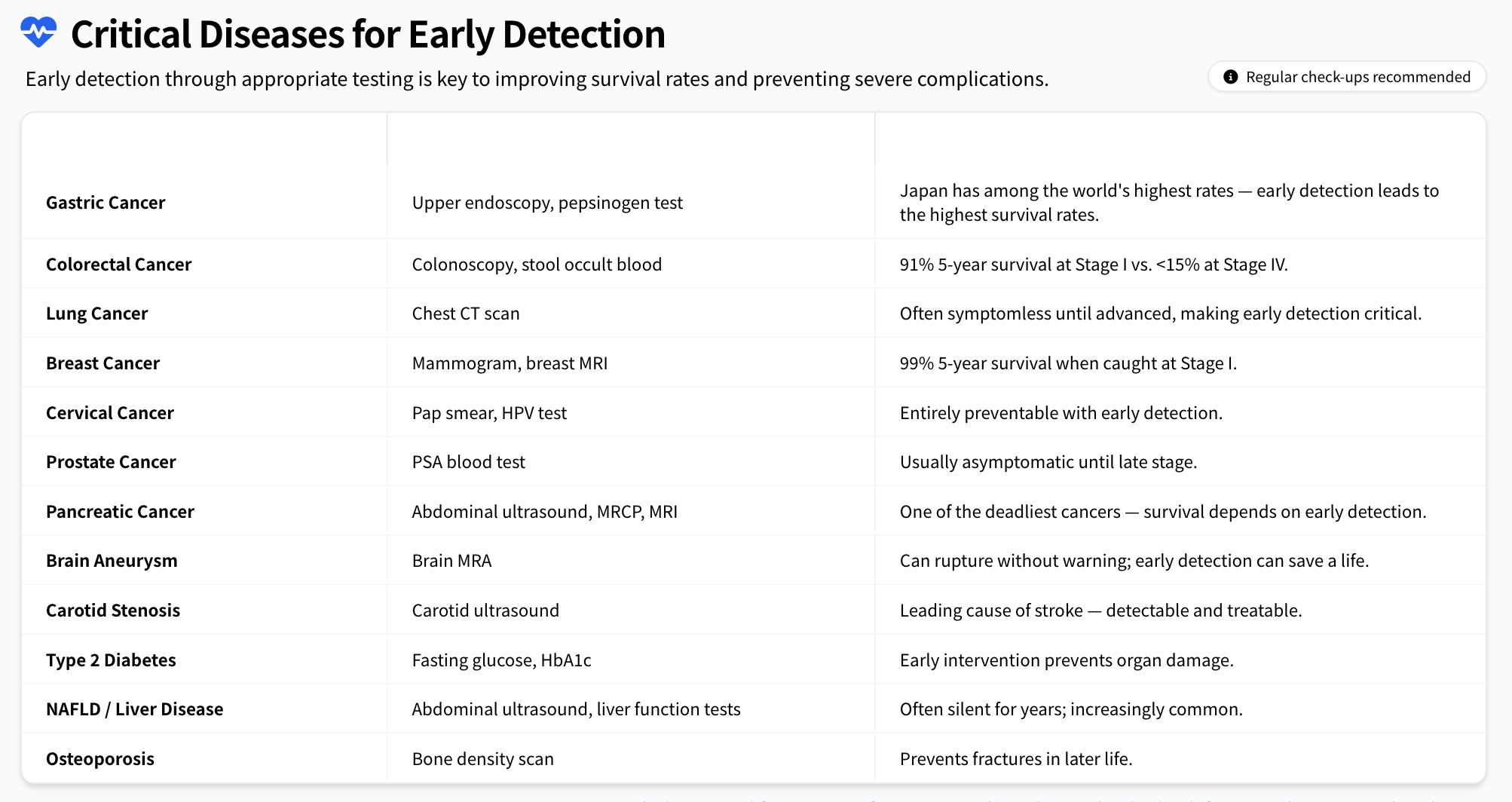
This table tells a story I’ve seen play out in real patients, real families. Every one of those diseases is far more treatable — and far less devastating — when caught at the beginning.
Japan’s Longevity Secret — And Why Ningen Dock Is Central to It
People often ask: Why do Japanese people live so long?
Diet is part of it. Lifestyle is part of it. Social connectedness is part of it.
But as a physician, I believe early detection through regular health screening is one of the most underappreciated factors.
Japan’s life expectancy stands at 84 years — one of the highest in the world, approximately 6 years longer than the US average.
Japan has extremely high rates of cancer detection in early stages compared to most countries, particularly for gastric, colorectal, and lung cancers. This is directly attributable to widespread ningen dock participation.
When you invest in knowing your health, you make better decisions. You treat things early. You prevent the cascade of complications that turns a manageable condition into a life-altering one.
Ningen dock isn’t just a health checkup. It’s a philosophy — the philosophy that your future self deserves the same care as your present self.
The Honest Challenges Foreign Visitors Face — And How to Overcome Them
I want to be transparent with you, because I think you deserve honesty rather than a sales pitch.
Accessing ningen dock as a non-Japanese speaker is not seamless — at least not if you try to do it alone. Here are the real barriers I hear from foreign visitors:
🚧 Challenge 1: Language
Many facilities operate entirely in Japanese. Forms, instructions, results, phone calls — all in Japanese. Medical Japanese is not conversational Japanese. Even fluent Japanese speakers struggle with clinical terminology.
A mistranslation of your medical history or current medications isn’t just inconvenient — it can genuinely affect your screening results and the recommendations you receive.
🚧 Challenge 2: Understanding Results
Your report will likely be in Japanese, filled with medical terminology and Japanese reference ranges that differ from what you’re used to. Without guidance, an “abnormal” finding might cause panic unnecessarily — or a concerning finding might be overlooked.
🚧 Challenge 3: Choosing the Right Package
With dozens of facilities offering different packages at varying price points, choosing the right one for your specific health profile requires genuine medical knowledge. A 35-year-old woman with a family history of breast cancer has entirely different needs than a 55-year-old man with a history of smoking.
✅ The Solution
This is precisely why services like MEDICAL CHECKUP JAPAN CONCIERGE exist — to make ningen dock fully accessible to international visitors, with zero stress and complete confidence.
How Medical Checkup Japan Concierge Helps You Every Step of the Way
I want to introduce you to the service I personally recommend for foreign visitors who want to experience ningen dock.
MEDICAL CHECKUP JAPAN CONCIERGE was created specifically to bridge the gap between world-class Japanese healthcare and the international visitors who deserve access to it.
Here’s what we do for you:
🩺 Step 1: Personalized Pre-Consultation (Free)
Before anything is booked, a medical professional sits down with you (virtually or in-person) to discuss:
Your health history and concerns
Family medical history
Current medications and conditions
Your goals for the checkup
Based on this, they recommend the specific facility and package that best matches your profile. Not a one-size-fits-all recommendation — a genuinely personalized one.
📅 Step 2: Complete Booking Coordination
They handle every single aspect of the booking:
Priority appointment access — even during peak seasons
All communication with the hospital in Japanese
Pre-exam instructions translated into English
Dietary and medication protocols clearly explained
🏥 Step 3: Day-of-Exam Support
On the day of your checkup:
A bilingual medical interpreter accompanies you throughout
All paperwork and check-in handled for you
Real-time explanation of each test as it happens
Immediate translation of any findings or doctor’s comments
Cultural and logistical navigation so you focus only on your health
📋 Step 4: Results Translation & Consultation
Once your results are ready:
Full English translation of your medical report
One-on-one consultation (video or phone) to walk through every finding
Explanation of Japanese reference ranges vs. international standards
Personalized health recommendations based on results
Coordination of any necessary follow-up — whether in Japan or with your home physician
🌏 Why This Matters
As a doctor, what I value most about this service is the last step. A health report is only useful if you understand it. I’ve seen too many people receive their results, fail to understand the nuances, and return home without acting on findings that warranted attention. Having a medical professional walk you through your results isn’t a luxury — it’s essential.
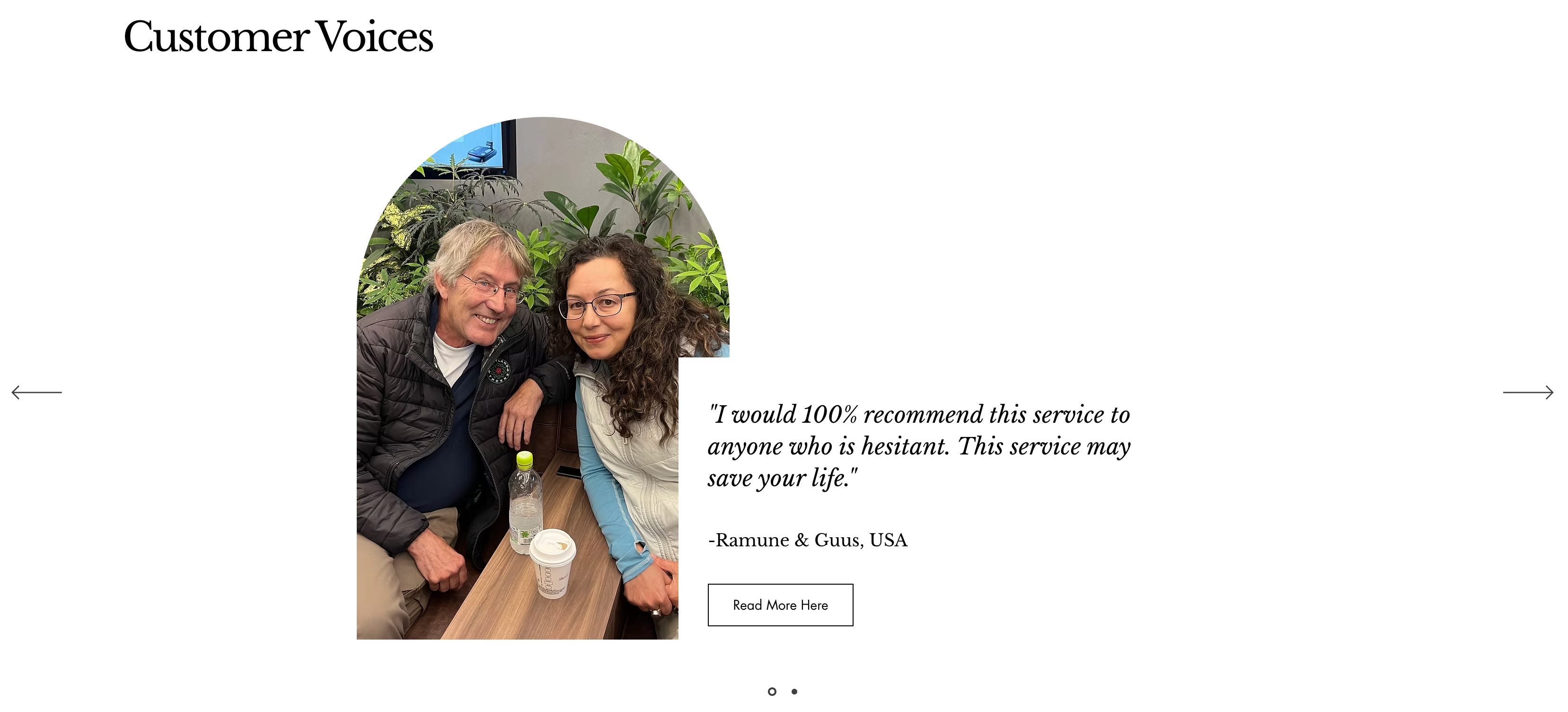
What Real Patients Say About Ningen Dock
Sometimes the most powerful evidence isn’t medical research — it’s real human experience.
Frequently Asked Questions About Ningen Dock for Foreign Travelers
Q: Can foreigners get a ningen dock in Japan? Yes, absolutely. Many facilities in Japan accept international patients. However, most require Japanese-language coordination, which is why using a concierge service is strongly recommended.
Q: How long does a ningen dock take? Most packages are completed in 3–5 hours as a half-day experience. Two-day comprehensive packages are also available.
Q: Do I need to fast before ningen dock? Yes. Most packages require fasting from the night before (typically no food or water after midnight). Your concierge will provide specific instructions.
Q: What language will my results be in? Results are typically provided in Japanese. With Medical Checkup Japan Concierge, you receive a full English translation and a one-on-one explanation.
Q: Is ningen dock covered by travel insurance? Ningen dock is a preventive health screening, not a treatment, so it’s typically not covered by standard travel insurance. However, some international health insurance plans may cover a portion. It’s worth checking with your insurer.
Q: Can I get ningen dock on a tourist visa? Yes. There are no restrictions based on visa type. Any visitor to Japan can access ningen dock.
Q: How far in advance should I book? Popular facilities in Tokyo and Osaka can be booked out 1–3 months in advance, especially during peak travel seasons. Book as early as possible, ideally 4–6 weeks before your trip.
Q: Is it safe? Are there any risks? Ningen dock is primarily diagnostic — meaning the tests are designed to detect, not treat. The most “invasive” element is typically the endoscopy, which is performed by experienced gastroenterologists and carries minimal risk.
How to Include Ningen Dock in Your Japan Trip: A Practical Timeline
Many visitors to Japan don’t realize that ningen dock can be seamlessly woven into a normal travel itinerary. Here’s how I recommend planning it:
6–8 weeks before your trip: → Contact MEDICAL CHECKUP JAPAN CONCIERGE for your free health consultation → Decide on your package and preferred facility (Tokyo, Osaka, Kyoto) → Confirm your appointment date
1–2 weeks before your checkup: → Review pre-exam instructions (fasting, medication restrictions) → Prepare your medical history summary in English → Confirm transport and logistics with your concierge
Day of your checkup: → Arrive at the facility with your concierge/interpreter → Complete 3–5 hours of comprehensive screening → Receive same-day results consultation with your doctor
After your checkup: → Receive full English results report within a few days → Schedule a results consultation with your MEDICAL CHECKUP JAPAN CONCIERGE advisor
A Final Word From Me, as a Doctor
I write this not as a marketer, but as a physician who has watched too many people receive diagnoses that came too late.
The patients who haunt me most aren’t the ones with rare diseases or tragic accidents. They’re the ones who had entirely preventable, entirely detectable conditions — who simply didn’t know, because nobody had looked.
Ningen dock changed how I think about healthcare. Growing up in Japan, I took it for granted. Now I understand it is one of the greatest gifts a health system can offer: the gift of knowing.
If you are traveling to Japan — whether for a week or a year — I genuinely encourage you to consider dedicating half a day to ningen dock. Not because something is wrong. But because knowing what’s right is exactly as important.
Your future self will thank you.
A Quick Note — Save the Date
If you (or someone you know) will be in Tokyo on May 2nd, I have something special planned.
I’ll be hosting a very limited, in-person event where you can experience Japanese preventive healthcare firsthand—including the opportunity to participate in a guided medical checkup in a real clinic setting.
👉 Early registration link (limited access):
https://luma.com/event/manage/evt-fIYsgqxBxKRLOo3
I’ll be sharing the full details, behind-the-scenes, and what to expect in my upcoming newsletter—so if you’re interested, make sure to subscribe and stay tuned.
For now, I highly recommend keeping your morning open and sharing this with anyone you know who will be in Tokyo around that time.
Ready to Book Your Ningen Dock in Japan?
Medical Checkup Japan Concierge is here to make this seamless for you — from choosing the right package to understanding every result.
📧 Email: info@japanwellnesstravel.com
🌐 Website: www.medicalcheckupjapan.com
👉 Start with a free 30-minute health consultation — share your health concerns, travel dates, and goals. We’ll take care of everything else.
Because your health is not a luxury. It is the foundation of everything.
As a Japanese resident and regular Ningen Dock patient, I agree with the recommendation. It seems to be quite rare outside Japan, though private health insurance coverage in the UK did give me something similar. Not quite as deep a dive but the basics. The good thing is that they give you all the results so if you want you can show them to your regular doctor to get their opinion.
It is worth noting that not all ningen dock offerings are the same. For example the place I go to doesn't include any MRI in the standard package. Also in my experience the blood pressure reading is variable - they don't let you properly relax before taking it and instead simply deduct 10 from the reading. It actually works out about right (I take my BP every day) but I'd think it would be better to allow the patient to calm down for a few minutes and not make adjustments.
This is a very important article. I have had 3 times about 5 years apart, and I found some problems that could be taken care of, EARLY, thanks to the Ningen Dock. Most of the experience was smooth and friendly. My husband picked a different hospital with a stomach camera without anesthesia, which I didn't think I could endure without gagging, so he found me another program. Thanks, Doc Miki, for informing the public.