

I’m writing this from the bus, on the way back from what might be the best onsen trip I’ve taken yet. I still smell faintly of sulfur, and after days barely stopping at the hospital, the ache that had settled into my lower back is, for the moment, gone.
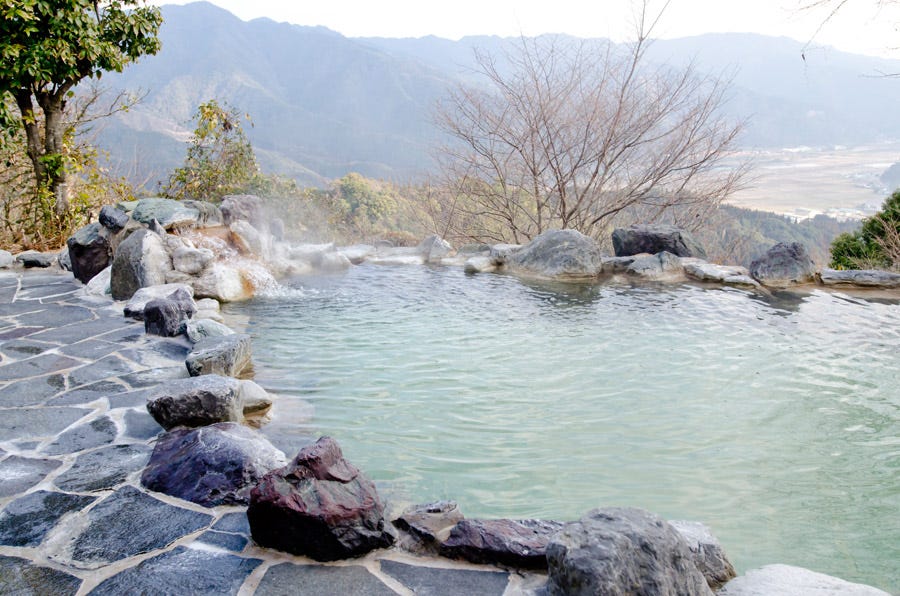
I’m not going to tell you which town I just left. That’s next week’s post, once I’ve had time to do it justice. But the trip was good enough that I wanted to write about onsen health benefits first, while the feeling is still fresh, and before the specific place distracts from the bigger question: how much of this is real, medically, and how much is just a genuinely good two days off?
Here’s what’s actually in this guide:
What is Onsen
Where onsen culture comes from, and why the tōji tradition matters more than people think
What the research actually supports for sleep, pain and mood, and what it doesn’t
Who should be careful, and the safe way to get in and out of a hot bath
Onsen etiquette for foreigners, tattoos included
A real guide to spring types
What is an Onsen
In Japan, “onsen” (温泉) is a legal term, not just a feeling. Under the Hot Springs Act of 1948, water or gas that comes out of the ground counts as an onsen if it’s 25°C or warmer at the source, or if it contains at least one of 19 listed substances above a set amount (source).
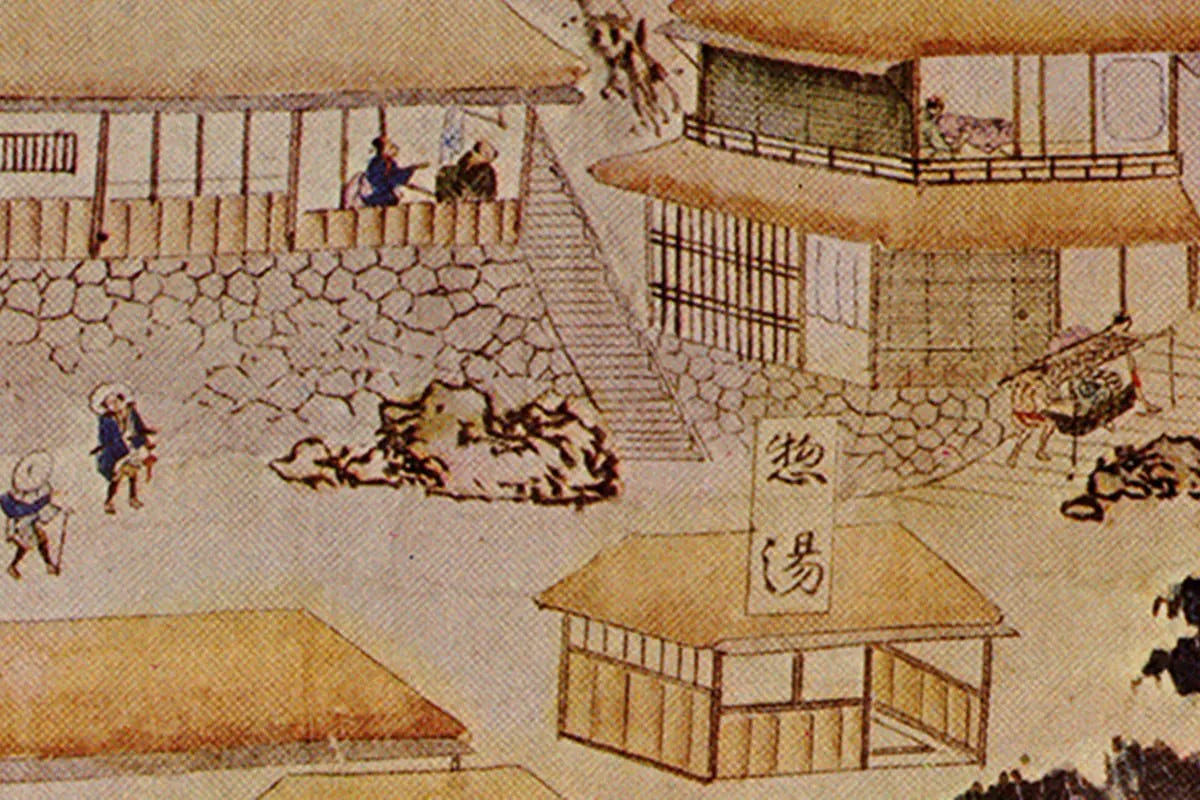
Here’s the confusing part. A neighborhood public bathhouse, a sento (銭湯), is usually just tap water heated in a boiler. It can be just as hot, just as communal, and just as relaxing as an onsen, but because the water isn’t coming from a natural spring, it doesn’t legally count as one.
Meanwhile, a spring that’s barely lukewarm can legally be an onsen, as long as it carries the right minerals. What you feel in the water and what the law calls the water are two different things.
Japan has more than 3,000 onsen resorts, according to a 2016 Ministry of the Environment survey (source).
Where onsen culture comes from
People have soaked in Japan’s volcanic springs for a very long time. Dogo Onsen in Ehime is reputed to be the oldest, tied to legends of early emperors. Buddhist monks used springs for purification, and farmers and fishermen took ritual baths at set times of the year.
The tradition that matters most to me, as a doctor, is tōji (湯治): historically, spending days or weeks at a hot spring town specifically to rest and recover, often at simple inns where guests cooked their own meals. It wasn’t a vacation in the way we use the word now. It was closer to a prescribed rest cure, water included.
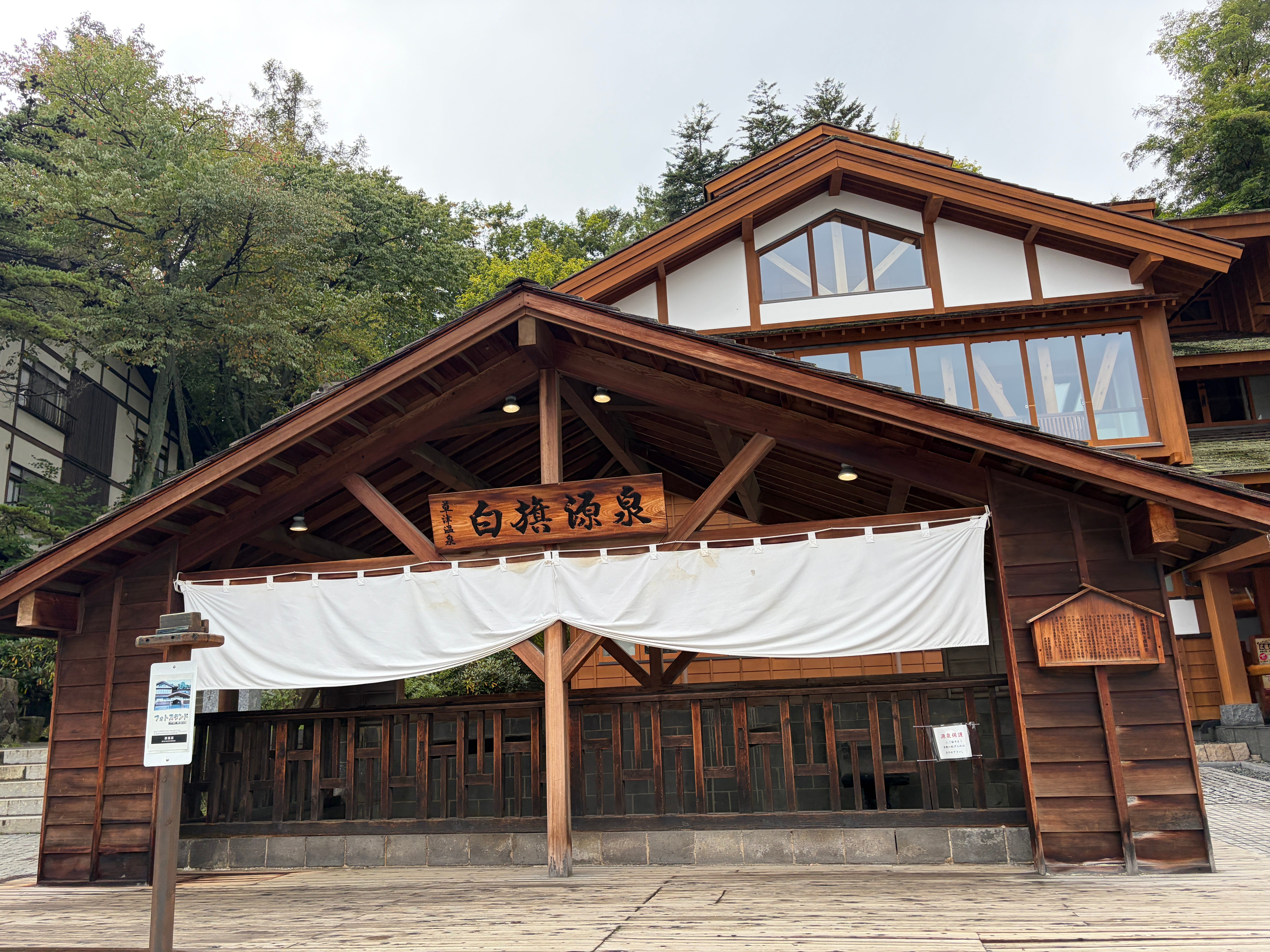
A short onsen trip today, even just one night away, is a small echo of that older idea. You sleep more, eat slower, and step outside your normal routine for a day or two. I think that context deserves as much credit for how good you feel afterward as the mineral content does.
What the research actually shows about onsen health benefits
Here’s what I’d tell a friend, based on the studies I could verify, with the mechanism behind each claim where one is known.
Sleep. Warm water raises your skin temperature, and the drop in core body temperature after you get out is one of the body’s natural cues for sleep onset, the same reason a warm bath or shower before bed is recommended almost everywhere in the world. In studies of Japanese-style bathing specifically, soaking to the shoulders in the evening has been reported to improve sleep quality and shorten the time it takes to fall asleep, especially in winter (source).
Pain and stiff joints. Heat increases blood flow to muscles and joints, and the water’s buoyancy takes weight off them at the same time. Systematic reviews suggest spring bathing has a modest positive effect on chronic pain and musculoskeletal conditions.
Stress and mood. Warm water bathing shifts the nervous system toward its “rest and digest” side. A review of 22 controlled studies found improvements in depression, sleep problems and stress this way. Anxiety improved in some studies but not all (source).
Blood pressure. Hot water widens blood vessels, so pressure drops during and after a bath. In one Japanese study of older adults, night-time hot spring bathing was associated with lower systolic blood pressure (source). That was a retrospective study, so it shows an association, not proof.
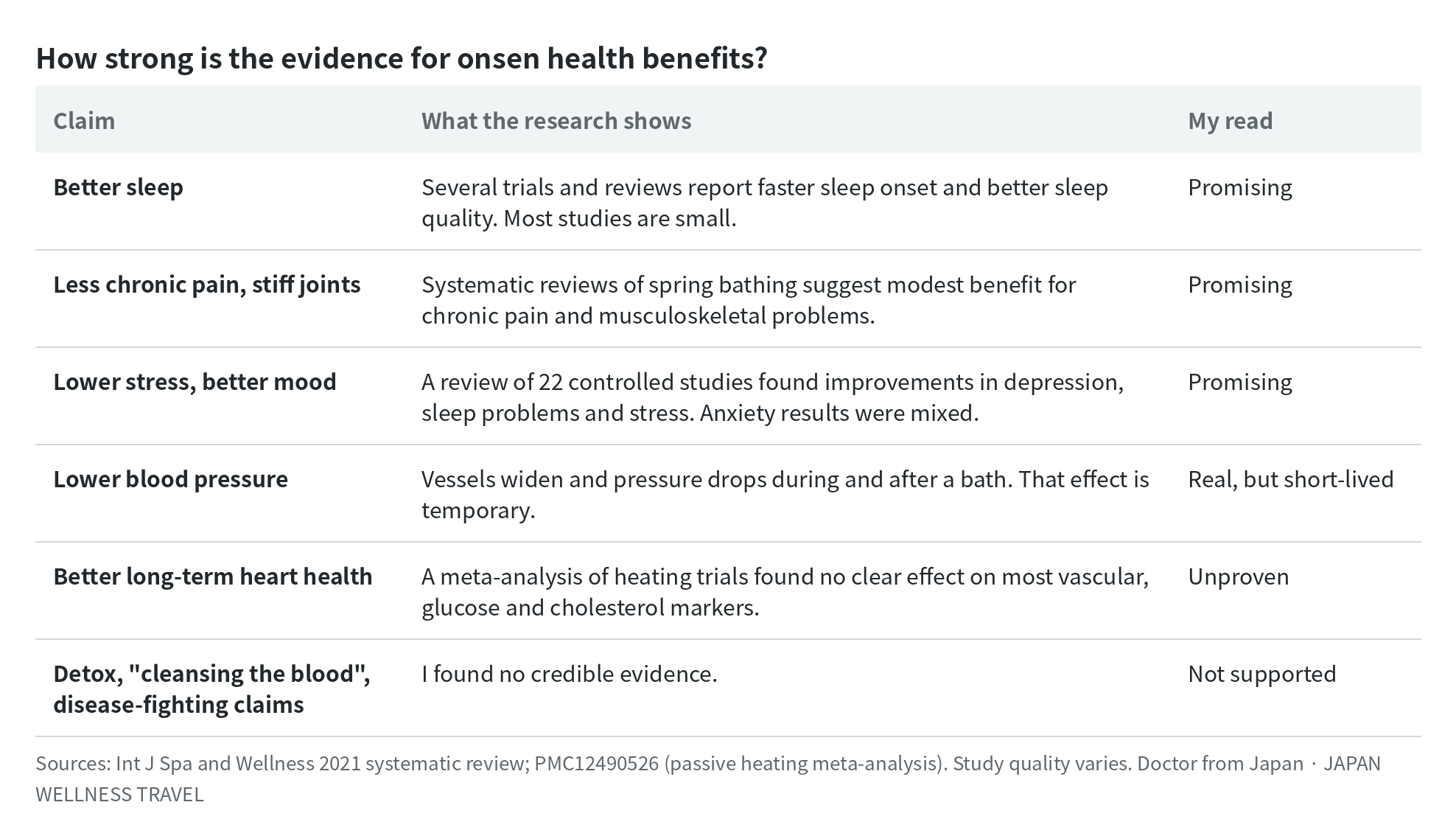
That’s the general research, the kind that applies to onsen as a category. What it can’t tell you is which specific spring, at which specific onsen town, is actually worth planning a trip around for a specific effect: which one is genuinely known for muscle recovery, which one for skin, which one for circulation, and why.
That’s what this week’s paid post covers: real onsen towns and facilities I’ve actually been to, matched to what they’re each genuinely good for. If you’re planning a trip to Japan, or you just love onsen as much as I do, that one’s worth subscribing for.
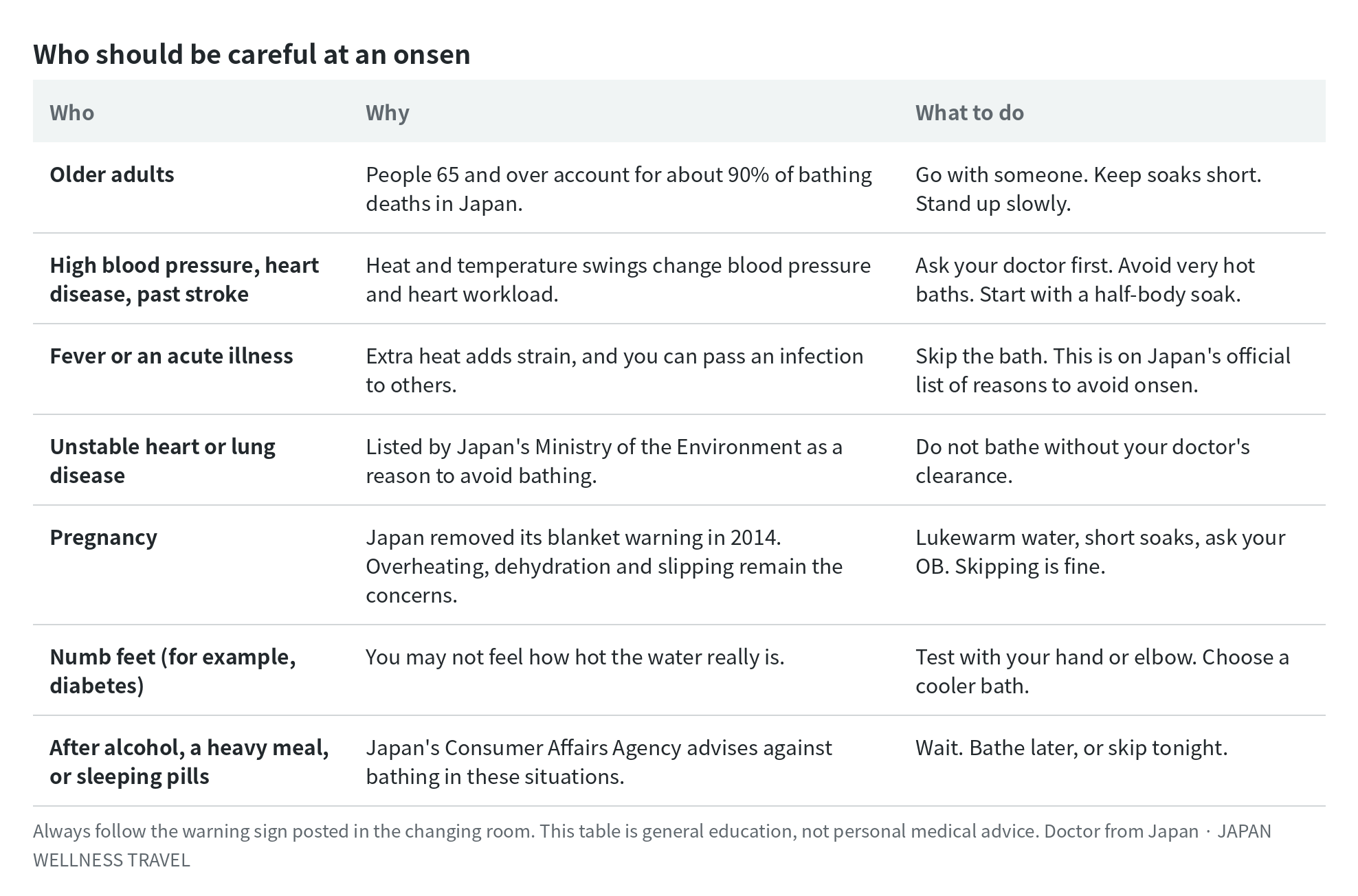
Who should be careful
Most healthy adults soak without trouble. Some people should check with a doctor first, or skip the bath entirely.
Japan’s Ministry of the Environment lists contraindications that onsen facilities must post, so read the sign in the changing room. They include acute illness with fever and unstable heart or respiratory disease. Pregnancy was on that list until 2014, when the ministry removed it after finding no scientific evidence that soaking endangers pregnancy (source).
If you have high blood pressure or a heart condition and aren’t sure where you stand, get it checked before your trip. A health screening in Japan can do that; see my guide to ningen dock for foreign travelers, or start with What Is a Ningen Dock?.
How to bathe safely
Here are a few practical notes for visitors.
Pour water over your body first. Start with your feet and legs, then your torso. Etiquette and physiology agree here.
Watch the water temperature.
Don’t stand up fast. Pause, then rise slowly.
Don’t bathe drunk or right after a big meal. Be careful after sedatives or sleeping pills.
Drink water before and after.
Get out at the first sign of dizziness, a pounding heart or nausea.
Onsen etiquette for foreigners
The rules are simple, and Japanese bathers will appreciate you following them.
Wash thoroughly at the washing stations before you enter the bath.
Keep your towel out of the water. Leave it on the edge or fold it on your head.
Tie up long hair.
No swimsuits in most public baths.
Keep your voice low, and don’t swim.
Tattoos are the question visitors ask most, and many onsen still refuse them. In a 2015 Japan Tourism Agency survey, 56% of facilities refused tattooed guests, 31% allowed them, and 13% allowed them with conditions such as covering the tattoo (source).
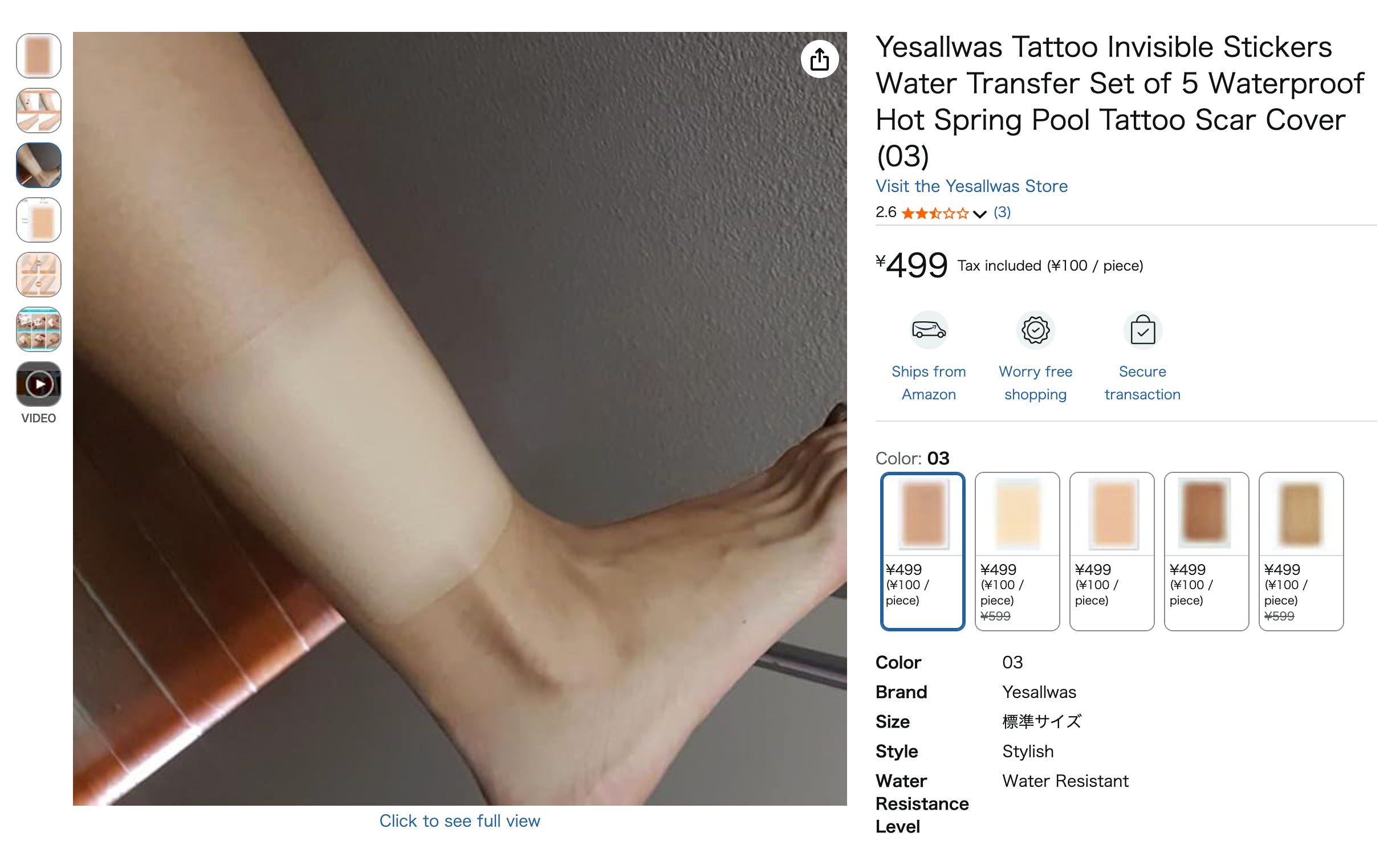
What has changed more recently is the workaround: skin-tone cover-up stickers and patches for small tattoos are now offered at some facilities, and can be enough to get you into a communal bath that would otherwise turn you away. It’s worth asking at the front desk if you have a small piece. Private baths and rooms with their own bath sidestep the question entirely.
A guide to onsen spring types
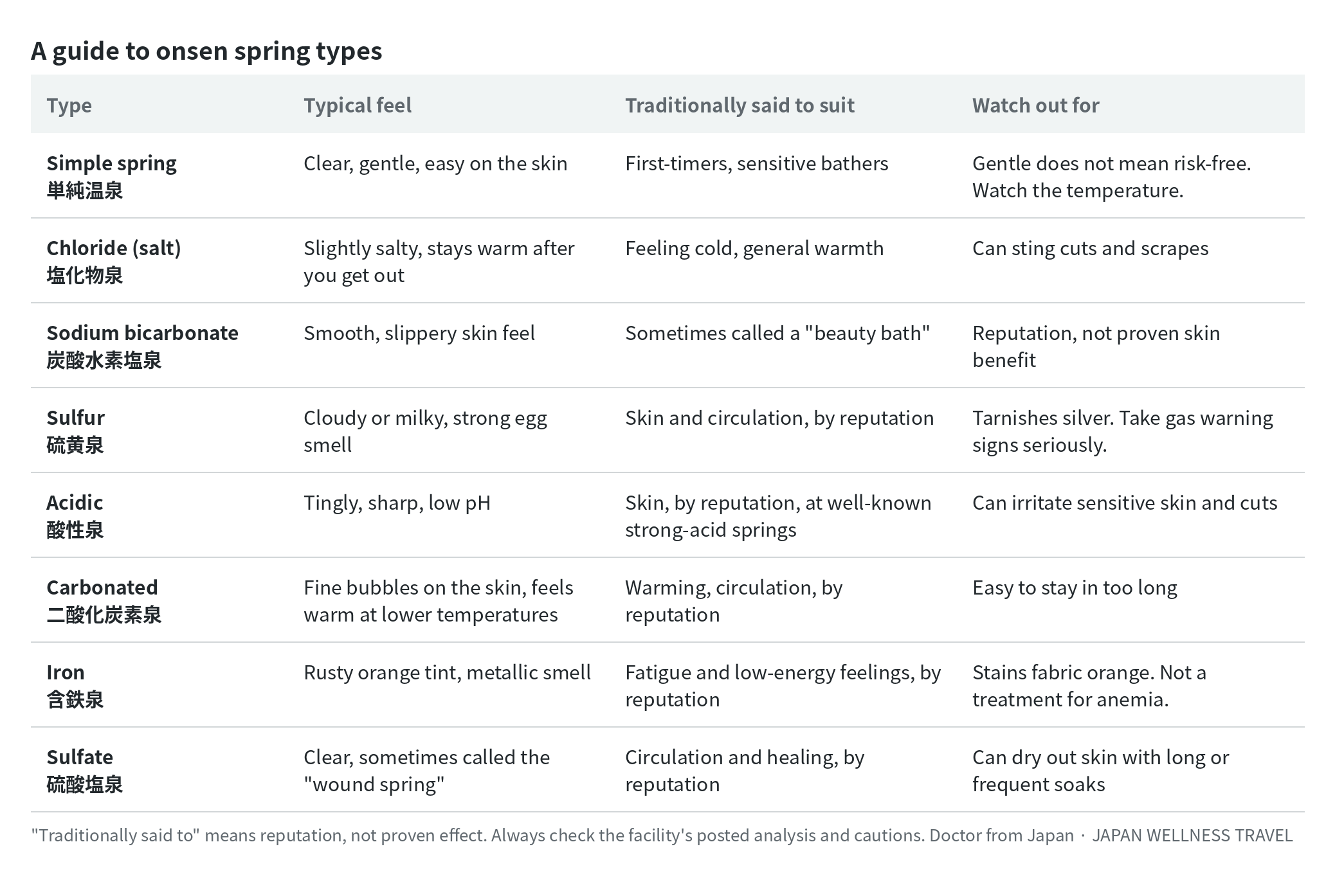
Signs at an onsen usually name the spring type, and it’s worth learning to read them. The type changes how the water actually feels, and the posted sign is also where any cautions specific to that spring get listed.
Japan classifies onsen water into roughly ten categories based on their dominant minerals. Here are the eight you’re most likely to run into as a visitor.
Do onsen actually help with back pain or muscle soreness?
There’s reasonable evidence for chronic pain and stiff joints in general, and plenty of people, myself included this week, feel real relief after a soak. I wouldn’t call it a treatment for a specific injury. If pain is severe, sudden, or doesn’t improve, see a doctor rather than relying on a bath.
That’s the medical case for onsen, as honestly as I can put it: modest, real, and worth much less hype than the signs by the bath suggest.
The specific, by-the-town version is in this week's paid post: Japan's three classic onsen rankings (one of them over 400 years old, and still the fastest way to get oriented), which real, named towns are actually famous for which spring type, and my honest read on which of those reputations hold up and which don't. And next week, in a free post, I'll finally tell you about the best onsen town I've been to yet, the one I mentioned at the start of this piece.
And next week, in a free post, I’ll finally tell you about the best onsen town I’ve been to yet, the one I mentioned at the start of this piece.
Subscribe below if you don’t want to miss either one.
Onsen season is just around the corner, so if you know someone planning a trip to Japan soon, this is a good one to share with them.
One more thing before I go: what’s the best onsen you’ve ever been to? Tell me in the comments. I’m always collecting my next trip.
Frequently Asked Questions
What are the real onsen health benefits?
For most healthy adults, onsen are good for relaxation, sleep and possibly aches and stiffness. Claims beyond that, such as detox or “cleansing the blood”, aren’t supported. The main risks are temperature swings, overheating and dehydration, not the water itself.
Can you go to an onsen with a tattoo?
Sometimes. Policies vary by facility, and many still refuse tattoos, though cover-up stickers are becoming more common for small tattoos. Private baths and in-room baths are the reliable option.
How long should you stay in an onsen?
Japan’s Consumer Affairs Agency suggests no more than 10 minutes at 41°C or lower. Shorter is better in hotter water. Leave before you feel flushed, sluggish or your heart starts pounding.
Is it safe to go to an onsen when pregnant?
Japan removed its blanket warning in 2014. For a healthy, low-risk pregnancy, short soaks in lukewarm water are generally considered acceptable, but overheating, dehydration and slipping are the concerns.
Can you go to an onsen with high blood pressure?
Many people with well-controlled blood pressure do. Talk to your doctor first, avoid very hot water, and choose a short, gentle soak. If your blood pressure or heart condition is unstable, skip it.
Do you have to be naked in an onsen?
In most public baths, yes. Swimsuits aren’t allowed. If that isn’t for you, a private bath or a room with its own bath is a good alternative.
⚕️ This article is for education, not personal medical advice. I’m a doctor, but I’m not your doctor. For decisions about your own health, please see a physician who can examine you.