

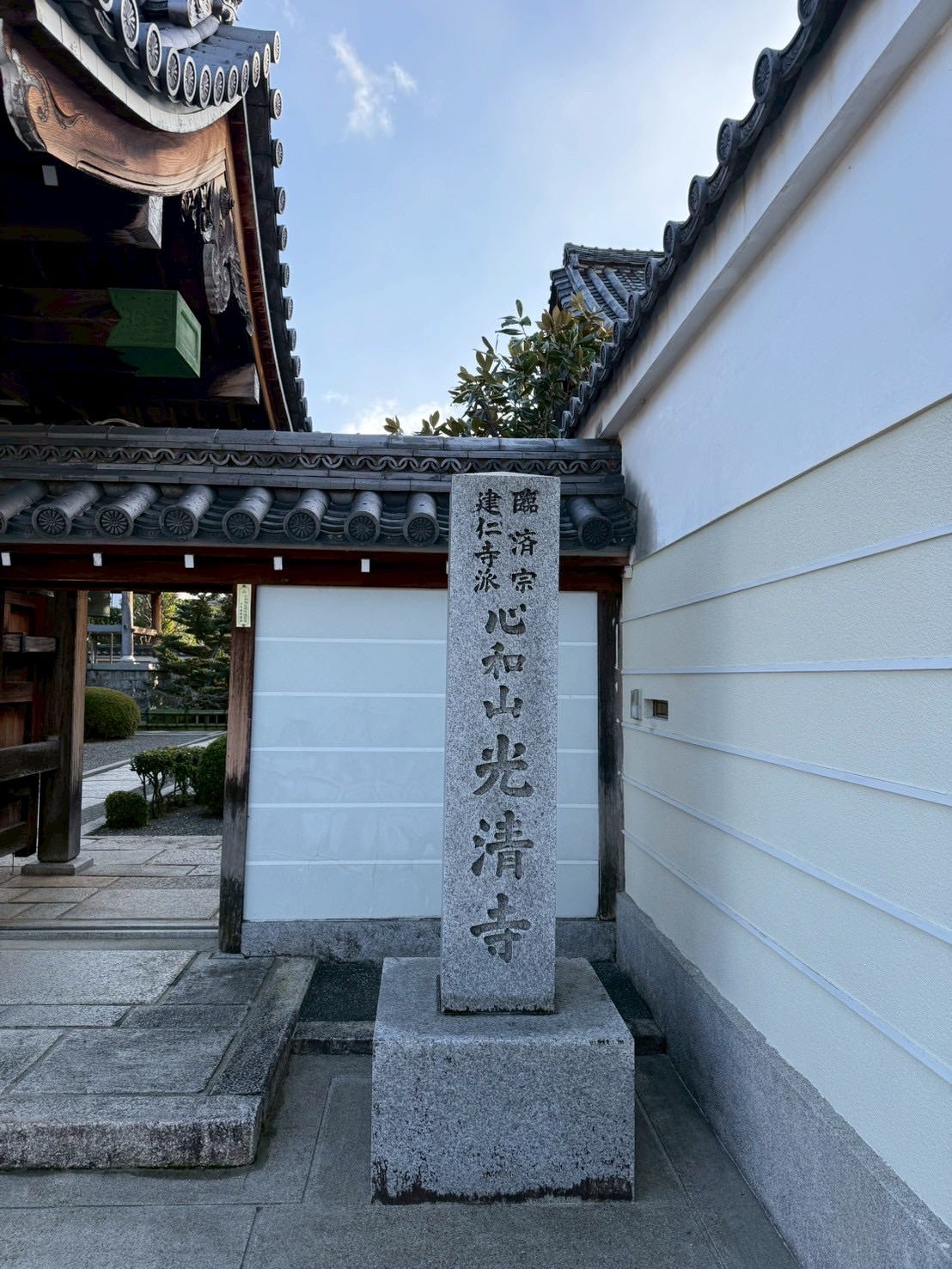
After receiving question from readers good places to experience Zen from my previous post about zen meditation, I recently had the chance to visit Kōseiji Temple in Kyoto.
In This Article, You Can Read:
The history of this Rinzai Zen temple, Koseiji
Why the famous “Garden of the Heart” is unlike any other Zen garden in Japan
What I personally felt after hearing its story directly from those who care for it
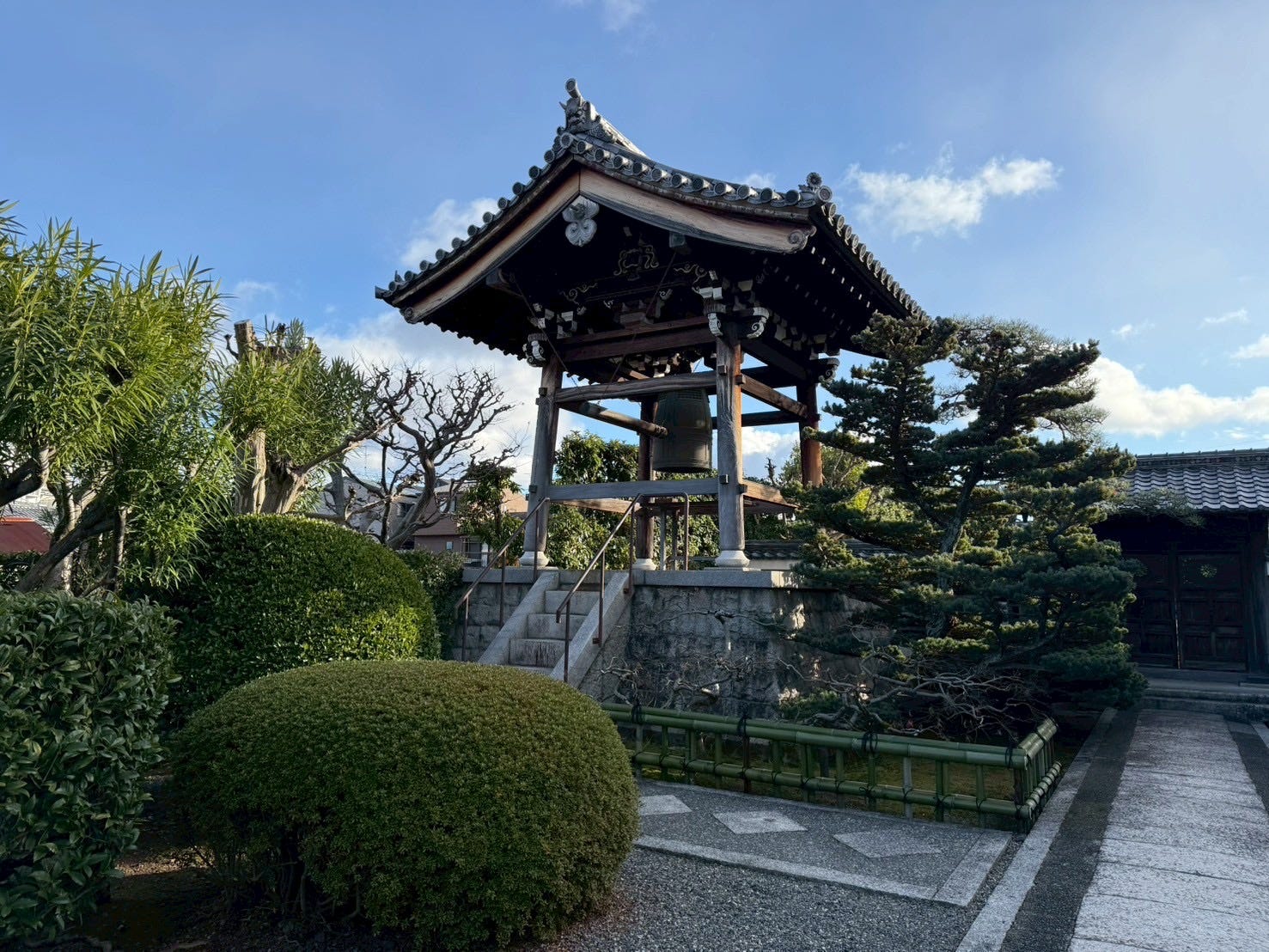
Kōseiji is a Rinzai Zen temple founded in 1669. It was established by the Zen master Kōzan Giyō under the patronage of Prince Fushimi-no-miya Sadayuki, who built the temple to pray for his mother. Later, the temple was renamed Shinwazan Kōseiji, meaning something close to “a mountain where the heart becomes harmonious.”
Hearing the Story of Kōseiji From the Inside
What struck me was how consistently the temple’s history returns to one theme: quiet dedication rather than display.
For generations, Kōseiji was supported by the imperial family, and later by the Iwakura family, including Iwakura Tomomi, a key figure of the Meiji Restoration. Despite this, the temple never became grand or outward-facing.
The Garden That Left the Strongest Impression: “Shinwa no Niwa”
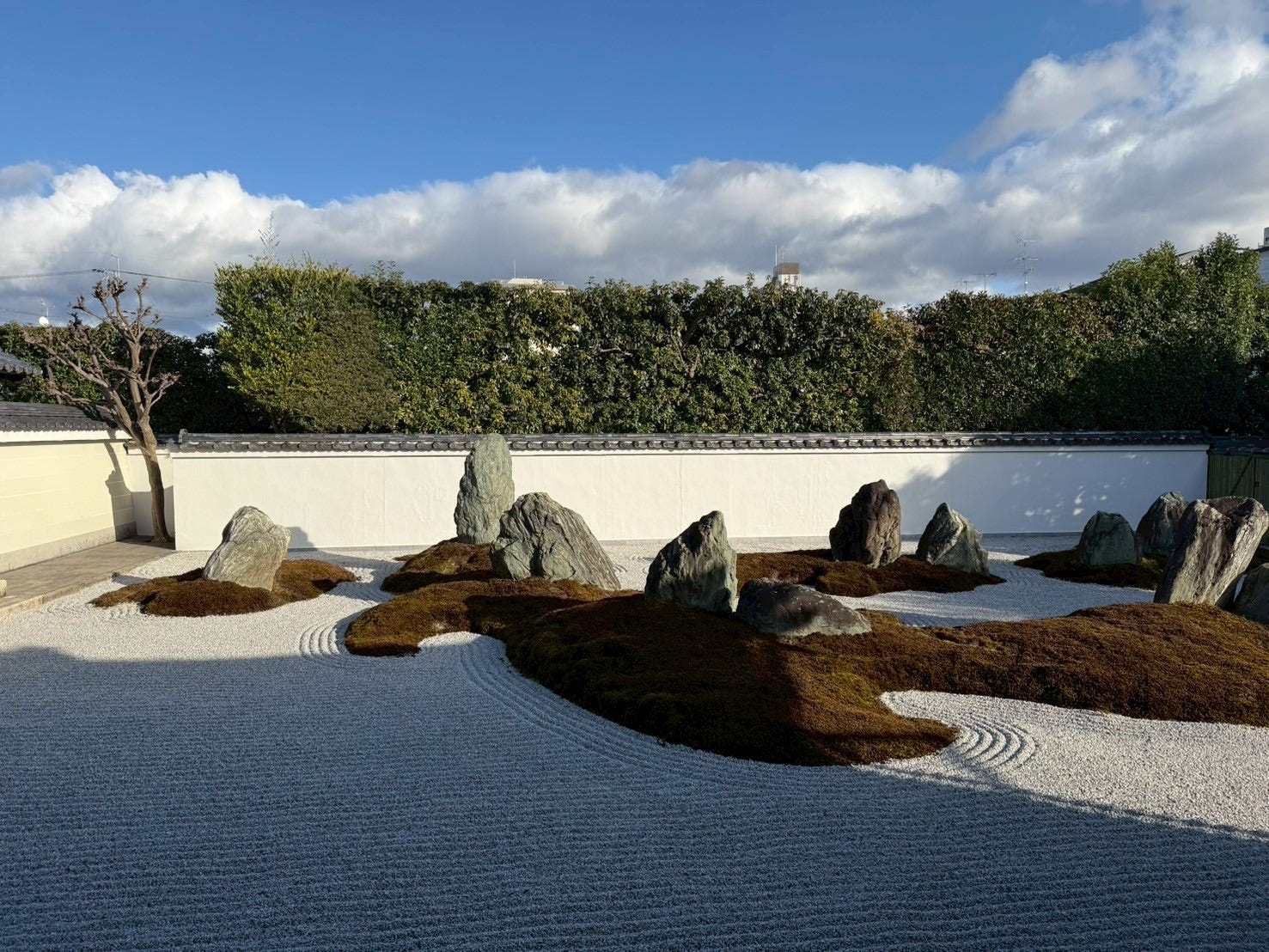
What stayed with me most was the Zen garden called “Shinwa no Niwa,” designed by the renowned garden artist Shigemori Mirei.
This garden is shaped around the kanji “heart.” But not in a literal or decorative way.
Shigemori designed it as a dry landscape garden representing a vast sea with sacred islands. The stones are arranged with layered meaning:
Islands symbolizing mythical lands such as Horai and Eishu
Stone groupings reflecting traditional Buddhist symbolism
White sand representing an endless ocean
There are no trees. No flowers. Nothing to distract the eye.
Standing in front of it, I didn’t feel like I needed to understand it. I just found myself standing still longer than expected.
I later learned that this is considered the first fully intentional heart-shaped Zen garden ever created, especially as a dry landscape garden. Knowing this while standing there made the silence feel even heavier — in a good way.
Another Garden, Another Feeling: Shingetsu Garden
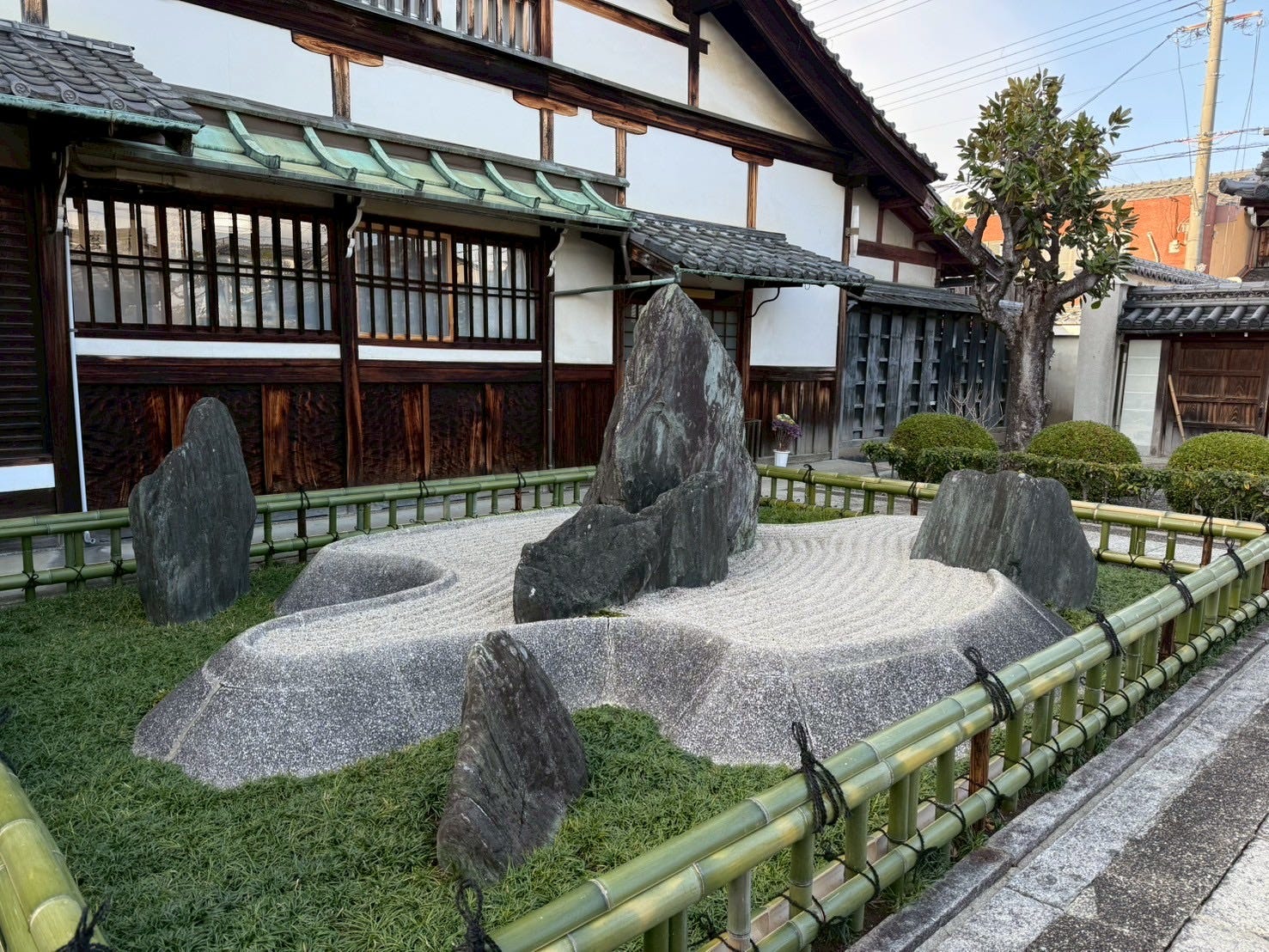
Kōseiji also has Shingetsu Garden, created later by Shigemori Mirei.
This garden was built after a pine tree died, and instead of replacing it, Mirei transformed the space into something new. White sand, stones, and a bamboo fence surround the area.
“Shingetsu” means something like the true heart reflected as the moon.
It felt gentler than the main garden — not as striking, but quietly comforting.
The Main Hall and the Weight of Time
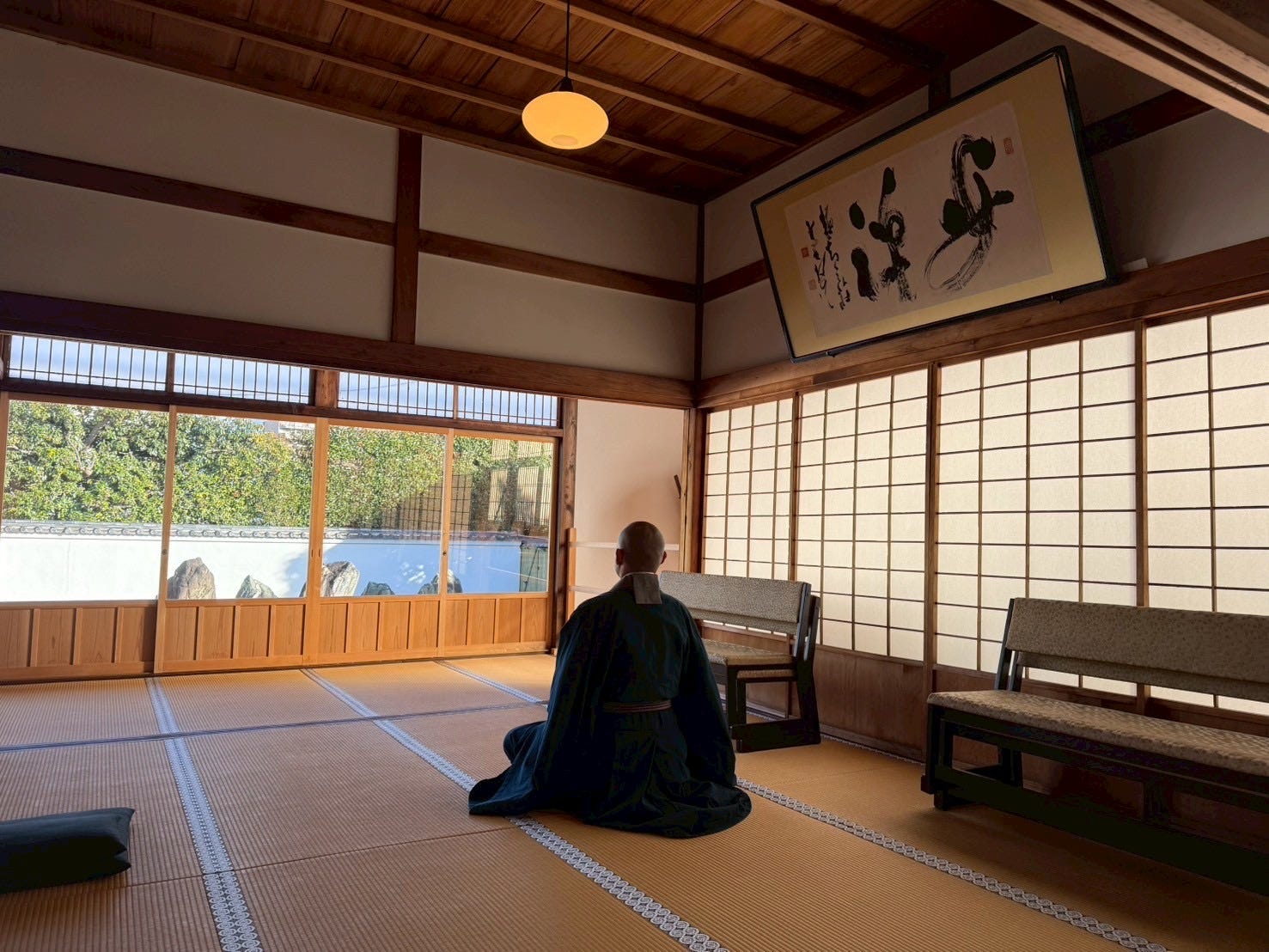
The main hall was completed in 1916 and formally consecrated the following year. Sitting there, I became aware of how many people had spent time in this same space over more than a century — sitting, praying, and remaining still.
Nothing felt preserved for display. Everything felt used in a quiet, continuous way, with care and respect.
This was also the place where I had the opportunity to speak with Miyazaki-san, the vice priest of Kōseiji, and to take part in Zen practice myself. Experiencing Zen there made the atmosphere of the hall clearer to me — not dramatic or solemn, but steady and practical. It was a place meant to be used, not observed from a distance.
Talking with Miyazaki-san in that setting added another perspective. His way of speaking was straightforward and calm, without trying to idealize Zen or make it sound mysterious. That tone matched the space itself and stayed with me afterward.
A Note Before Tomorrow’s Article
In tomorrow’s paid post, I will write in detail about something very different.
I will share my personal experience talking with Miyazaki-san, the vice priest of Kōseiji:
Why he became a monk
Why Zen felt difficult for him at the beginning
What helped Zen become more natural and accessible over time
What Zen means to him now, in his daily life
I put a lot of effort into writing that piece, and I truly hope you will read it if Zen, Japan, or inner stillness interests you even a little.
If You Are Interested in Visiting Kōseiji
Because Kōseiji is not open to the public, visiting requires careful timing and consideration, and details such as schedule and conditions matter a lot.
If you are genuinely interested in visiting or learning more, I might be able to help coordinate or ask about possibilities. Please feel free to reach out and let me know!
Thanks for sharing! I'd love to experience this zen garden someday.
This has great insights! Looking forward to my next visit to Kyoto!