

There’s something I’ve been wanting to share with you today.
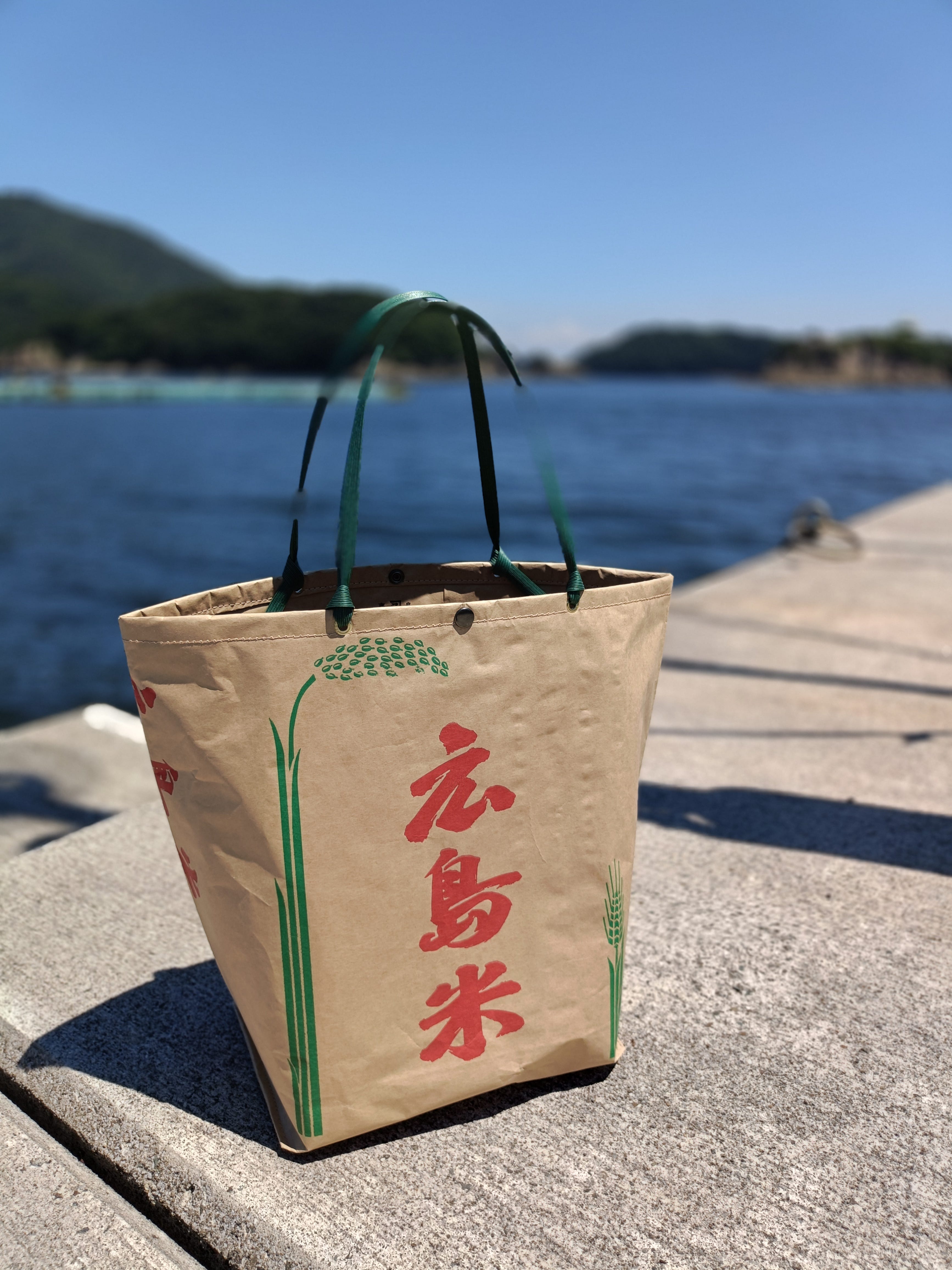
I came across an incredible bag — and the more I learned about it, the more I realized it wasn’t just the bag that was special, but the person behind it. The maker, Susumu Kataoka, carries forward a story of resilience and craftsmanship that spans generations — a legacy born in Hiroshima and still evolving today.
A Legacy Rooted in History — From Soldiers’ Trunks to Modern Bags
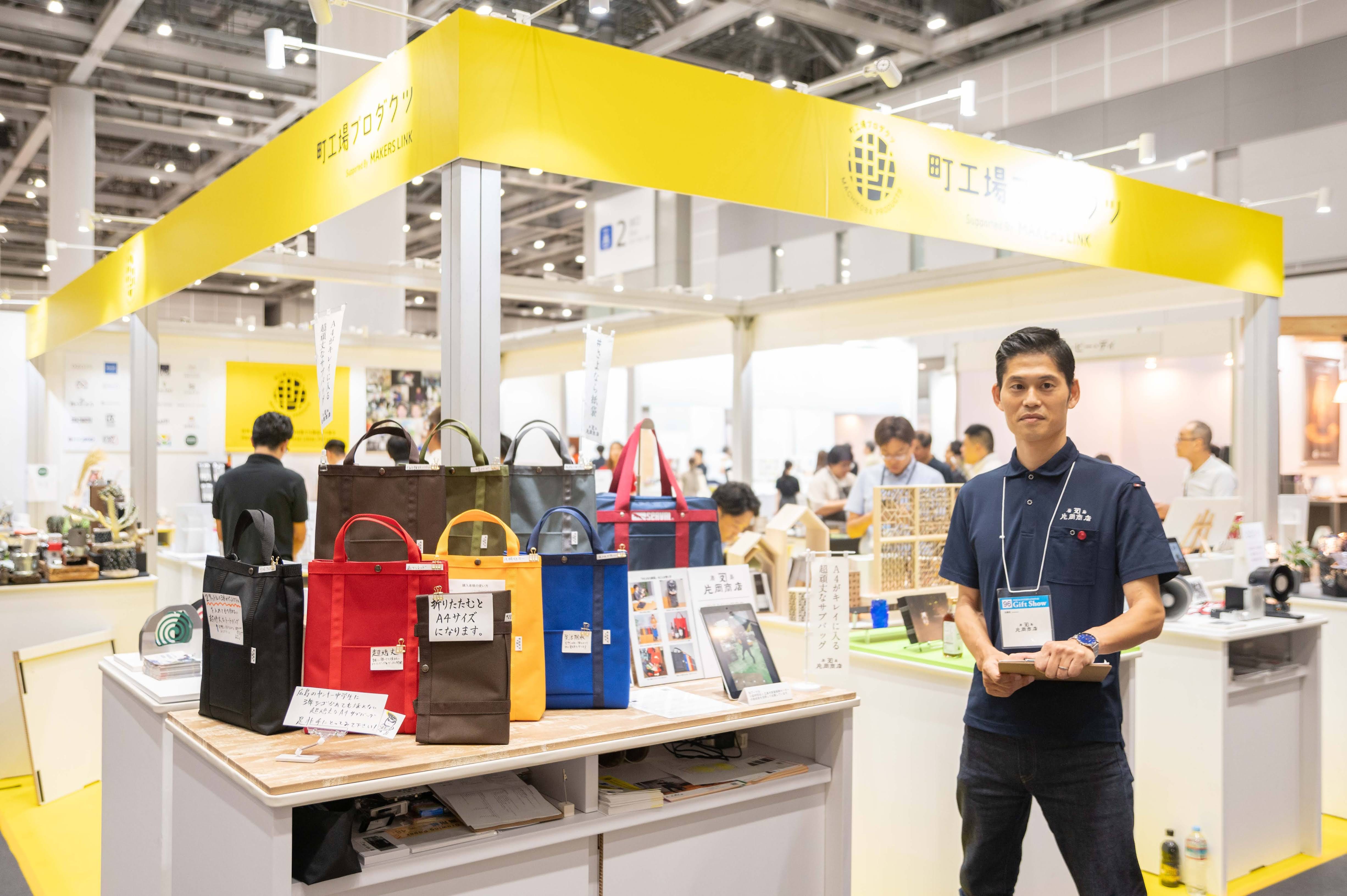
Kataoka Shoten’s story began in 1897, around the time of the First Sino-Japanese War.
The founder moved from Hyogo Prefecture to Hiroshima to produce Yanagi-gōri — wicker trunks woven from willow, used by Japanese soldiers to carry their belongings.
From the very beginning, the company’s philosophy was simple: “Make things that don’t break.”
After WWII, the store was destroyed in the atomic bombing, but the family rebuilt it, turning their craftsmanship toward school bags and durable daily-use goods.
And now, under Susumu Kataoka’s leadership, that same spirit of durability lives on in a completely new form: the rice bag tote.
1. Unbelievably Durable — The Secret Inside the Paper
The first thing that stands out about this bag is its incredible strength.
It’s paper, yet it can carry an astonishing amount of weight — literally 12 kilograms (26 lbs) without tearing.
In fact, Kataoka made a video where he stuffs six 2-liter bottles of water into the bag and swings it around… and it doesn’t budge an inch.
🎥 Watch the “indestructible” bag in action
So what makes it so strong?
It all comes down to what’s inside the paper.
① Triple-layered structure
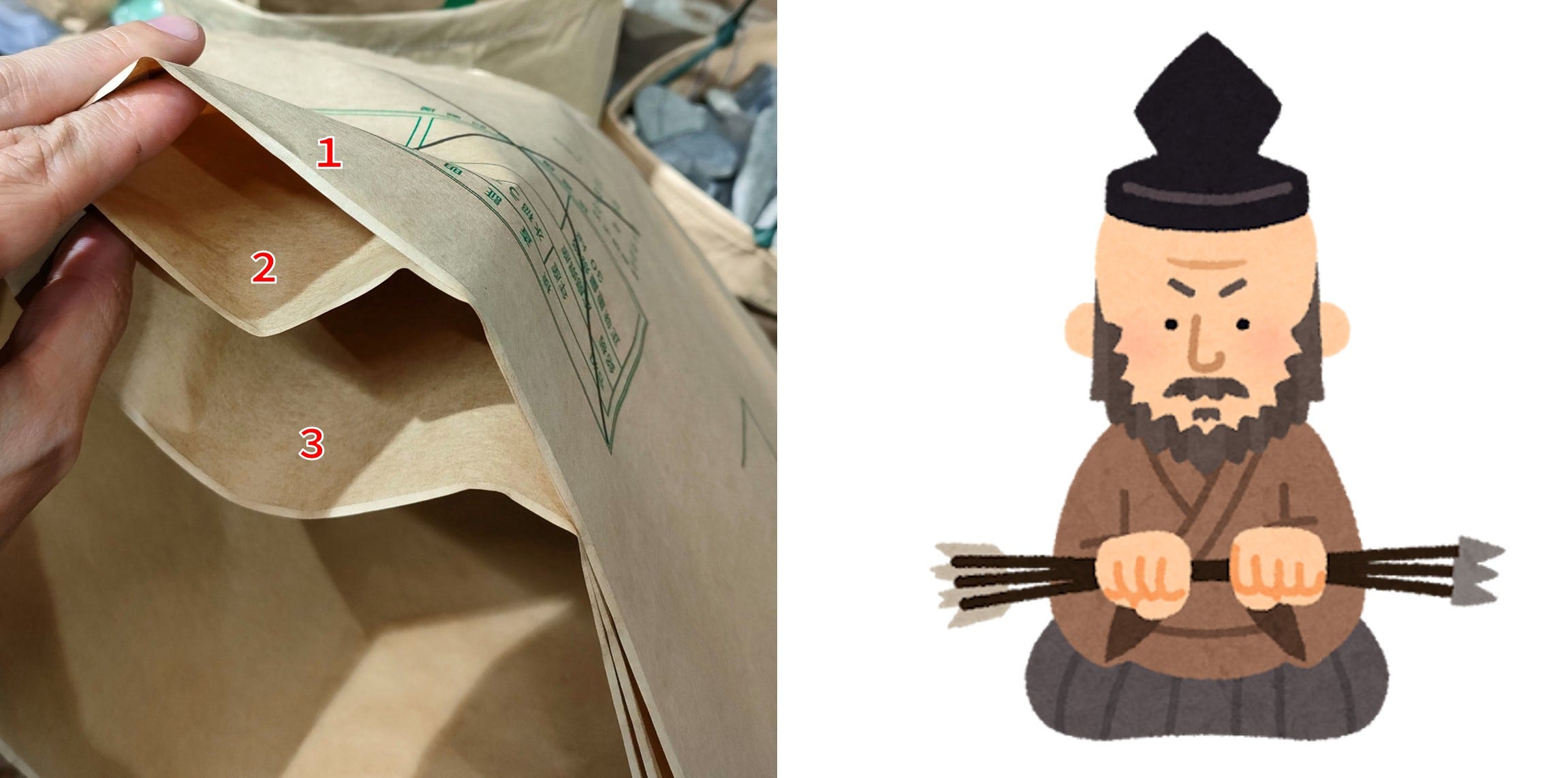
If you tear apart a rice bag, you’ll find it’s made of three layers of paper. Each layer reinforces the others — creating strength through unity.
② Made from long-fiber virgin pulp
Rice bags are crafted from virgin pulp, made by steaming and breaking down conifer wood into long, unbroken fibers. These fibers naturally intertwine, making the paper extremely tough.
Recycled paper, by contrast, uses shorter, broken fibers, so it lacks this level of durability.
The rice bag’s fibers are alive — flexible, strong, and deeply intertwined.
③ Natural, minimally processed material
Unlike coated or recycled papers, rice bag paper uses far fewer additives, maintaining a high level of natural purity. It’s strong and breathable — originally designed to hold 30 kilograms (66 lbs) of rice. As a tote bag, it’s practically over-engineered — a perfect reflection of Japan’s quiet obsession with quality.
2. Naturally Sustainable — Without Even Trying
Another reason I fell in love with this bag is its connection to nature.
It has a soft, almost skin-like texture and a faint woody scent.
It’s completely free from chemical finishes — just wood, water, and craftsmanship.
Interestingly, Kataoka didn’t start this project to “go sustainable” in the trendy sense of the word. He simply wanted to find new life for traditional Japanese materials and industry, to make sure they wouldn’t fade away.
That pure intention led to something beautiful: today, local elementary schools in Hiroshima use the rice bag tote as part of their SDGs (Sustainable Development Goals) education programs, where children make their own bags and learn about reusing materials.
It’s sustainability in the most authentic, down-to-earth way — not a buzzword, but a natural extension of care and creativity.
You can also see how the bag is made in this YouTube video!
3. Authentically Japanese — Culture You Can Carry
The third charm of the rice bag tote is how deeply Japanese it feels.
Each bag retains the original prints from rice producers — the names of different rice varieties, regional stamps, and colorful symbols.
No two bags are ever the same.
Even the metal buttons are made in Japan, and some totes feature adorable hand-stamped designs by local schoolchildren.
It’s such a small detail, but it carries so much heart. You can sense how much Kataoka values his local community, weaving together craftsmanship, education, and culture.
This bag isn’t just cute or practical. It’s a piece of Japan’s everyday life, handmade with sincerity and care.
From Hiroshima, to the World
As I listened to Kataoka-san’s story, I couldn’t help but imagine — people around the world carrying these rice bag totes on their travels, each one telling a story of Japanese craftsmanship and resilience.
I’ve seen plenty of “Japan-inspired” fashion abroad — T-shirts with random kanji that make no sense — but this is the real deal. This is authentic Japan, crafted by real hands, meant to last for years and age beautifully.
Win Your Own Hiroshima Rice Bag Tote!
And for those who’ve read this far — there’s a little surprise for you! Kataoka-san is giving away one of these handmade rice bag totes, along with a smaller komebukuro pouch (a traditional drawstring pouch once used to carry rice).
Whether you’re in Japan or abroad, shipping is free as well.
To join the giveaway:
Like this Post
Share this Post
Comment below and tell me what you’d carry in this bag — I’m using mine as a gym bag since it’s surprisingly spacious and sturdy!
I’ll announce one winner in a week!
If You Visit Hiroshima, Don’t Miss It
Kataoka Shoten is located just a 7-minute walk from the Hiroshima Peace Memorial (Atomic Dome). Inside the cozy shop, you’ll find a collection of rice bag totes —
each one unique, durable, and full of character.
They’re priced around ¥5,000 (under $40), and each one feels like a small piece of Japan you can take home.
When you visit Hiroshima, make sure to stop by. I’m certain you’ll be as inspired as I was — by a humble bag that carries not just things, but 127 years of history, craftsmanship, and care.
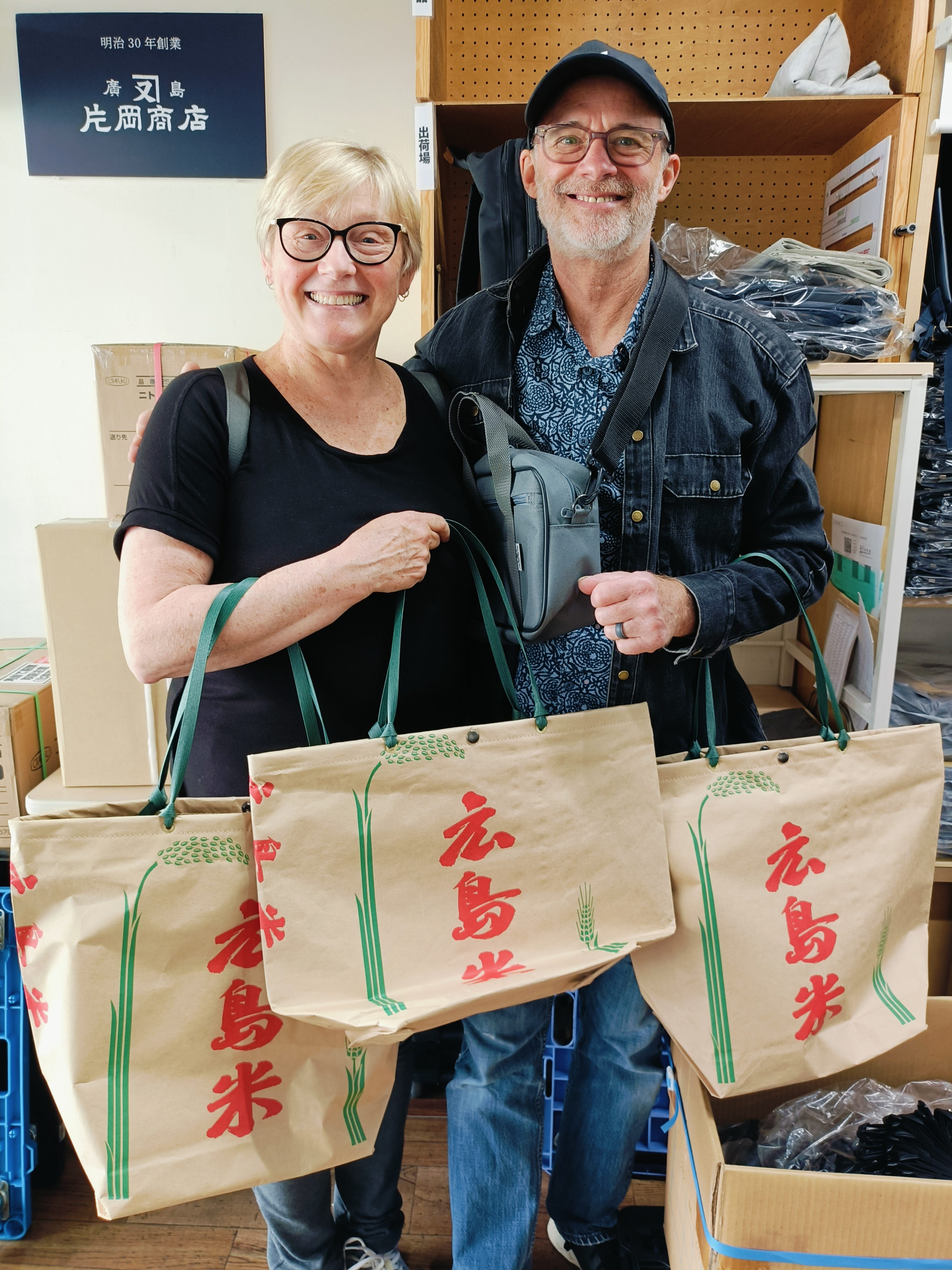
Kataoka Shoten (片岡商店)
📍 Hiroshima City, just west of the Peace Memorial Park
I’d carry my books to my Japanese lesson in it! 🎌🏯
Very nice article. We were just in Hiroshima in October-it was great! A very moving experience. I’ll have to look for this shop when we visit again!