I already wrote the deep dive on onsen health benefits: sleep, pain, mood, a temporary drop in blood pressure. If you haven’t read that one yet, start there — it has the full spring-type table and the actual research behind onsen as a category, and I’m not going to re-run all of it here.

What that post couldn’t tell you is where to actually go. “Onsen are good for you” isn’t very useful once you’re staring at a map of Japan with limited vacation days. The real question is which specific towns earned their reputation for which effect, and whether any of that reputation is worth trusting — and that’s the part I had the most fun digging into.
I’m giving you two full spring type free below, so you can see exactly how I handle this before you decide anything. Everything past that — the other seven types matched to real towns, the type Kusatsu actually belongs to, and a decision guide if you’re stuck choosing — is for paid subscribers.
If you’ve ever stood in front of a ryokan booking page with eight tabs open and no idea which town actually matches what you want, that’s the part built for you.
In this post:
Free sample: two full spring type, towns and all
For paid subscribers: the other seven spring types matched to real, named onsen towns, with what each one is actually known for
For paid subscribers: a decision guide for anyone stuck choosing where to go
Real onsen towns, matched to spring type
I’ve soaked in some of these myself, and for the ones I haven’t, I’m saying so plainly rather than pretending otherwise.
Free sample, so you know what you’re subscribing for:
Simple springs (単純温泉)
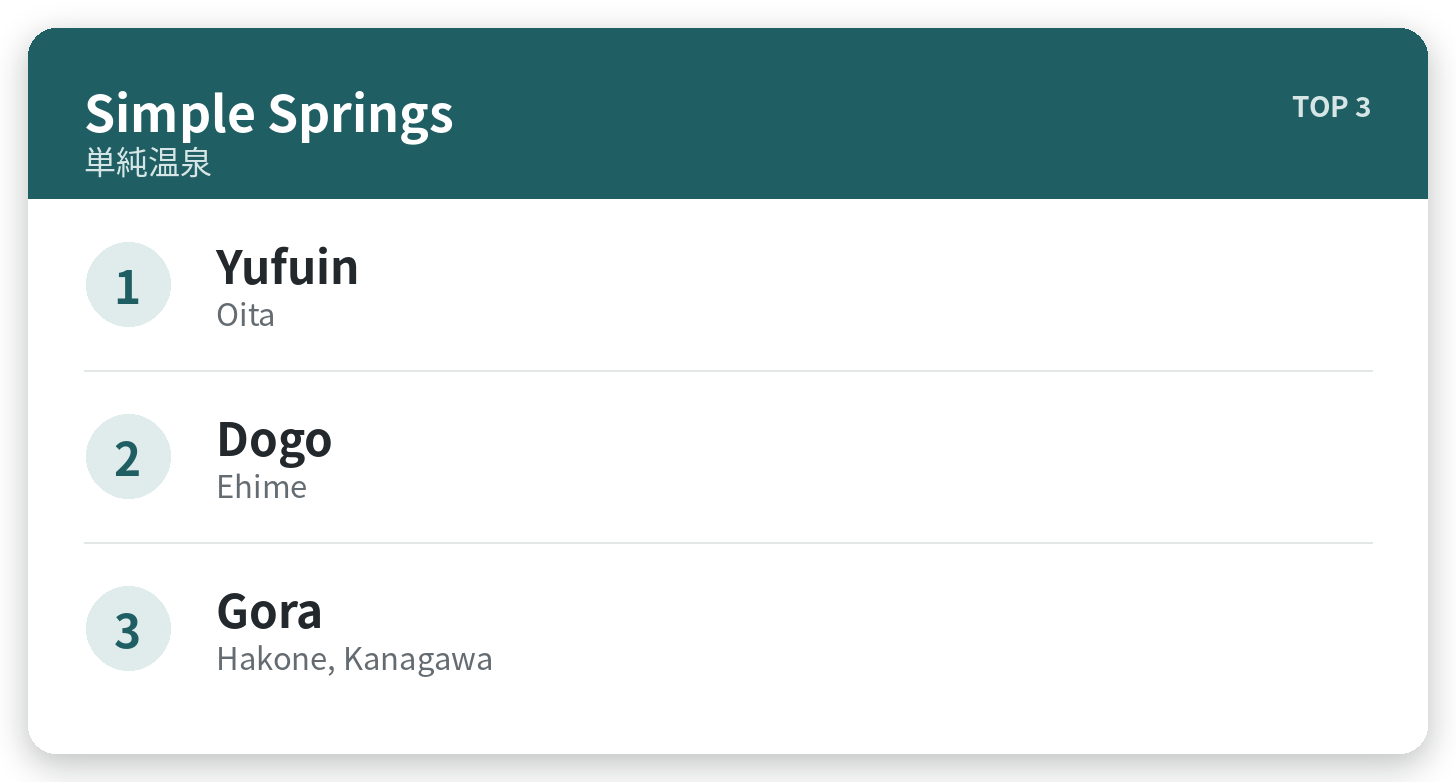
Simple springs are the gentlest category — low mineral content, close to neutral pH, easy on the skin. That’s not a weakness; it’s exactly why doctors (me included) point first-timers, kids, and anyone with sensitive skin toward this type before anything stronger.
Yufuin (Oita): the classic easy pick. Gentle by legal definition, and a genuinely relaxed, low-key onsen town to match
Dogo (Ehime): also on the “three ancient springs” list above — Dogo Onsen Honkan has been bathing guests for over a century in its current building, longer in spirit
Gora (Hakone, Kanagawa): an easy day trip from Tokyo, which is honestly why most people’s first onsen ends up being here
My take: genuinely the lowest-risk category to start with. No sting, no smell to adjust to, nothing to second-guess — just warm water doing what warm water does
That’s the format for every type: the real towns, what the type is supposed to do, and my honest read on whether that holds up. Below, for paid subscribers: the other eight types — including the one Kusatsu actually belongs to — a decision guide if you’re stuck choosing where to go, and the handful of onsen I’ve personally loved enough to go back to.
Acidic springs (酸性泉)
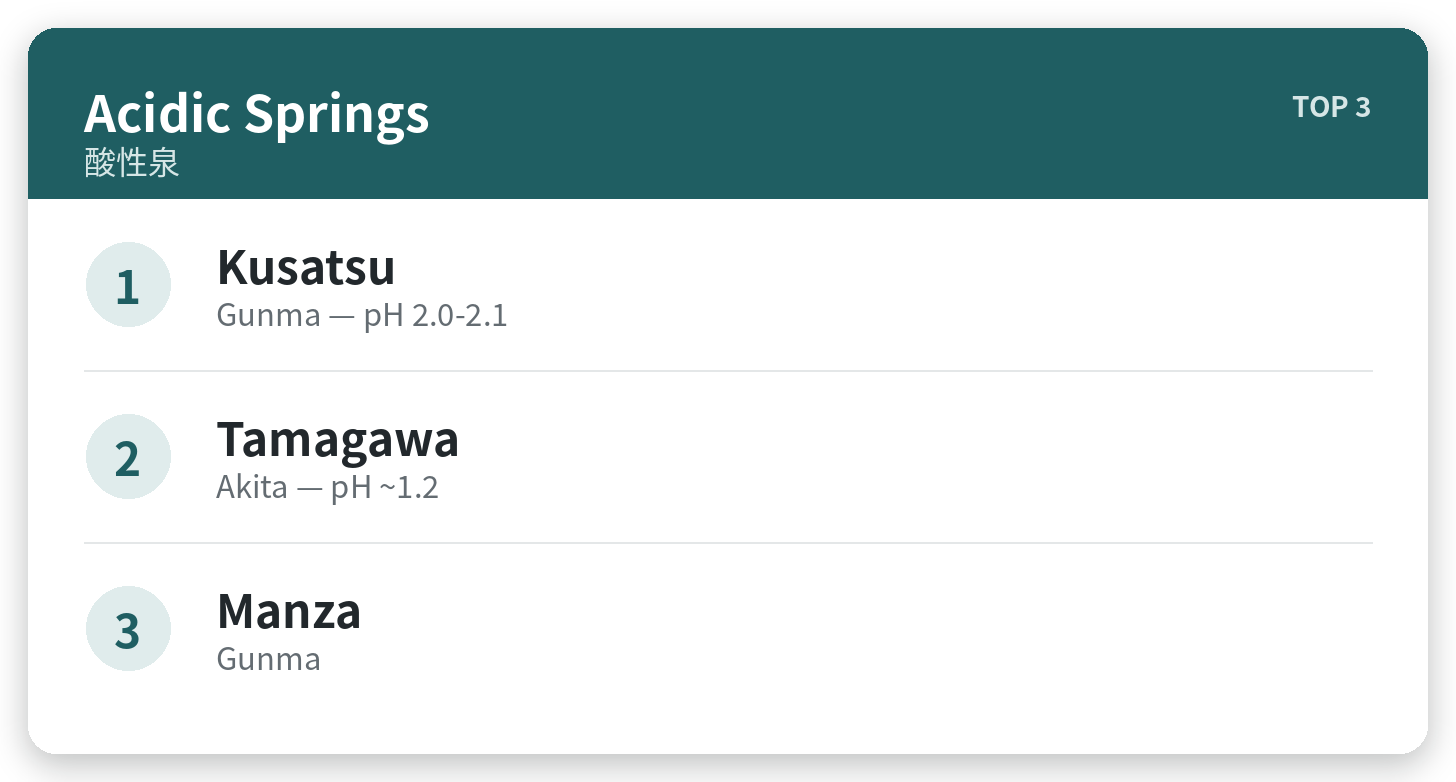
Acidic springs are meant to be a skin treatment — low pH, the idea being it works a bit like a chemical exfoliant, breaking down dead skin and (by reputation) keeping bacterial and fungal skin issues down. It's also just a more intense bathing experience, full stop.
Kusatsu (Gunma): I’ve bathed here myself — pH as low as 2.0-2.1, close to lemon juice. There’s a real sting on any cut or scrape, and it will visibly tarnish silver jewelry, which tells you how reactive it actually is.
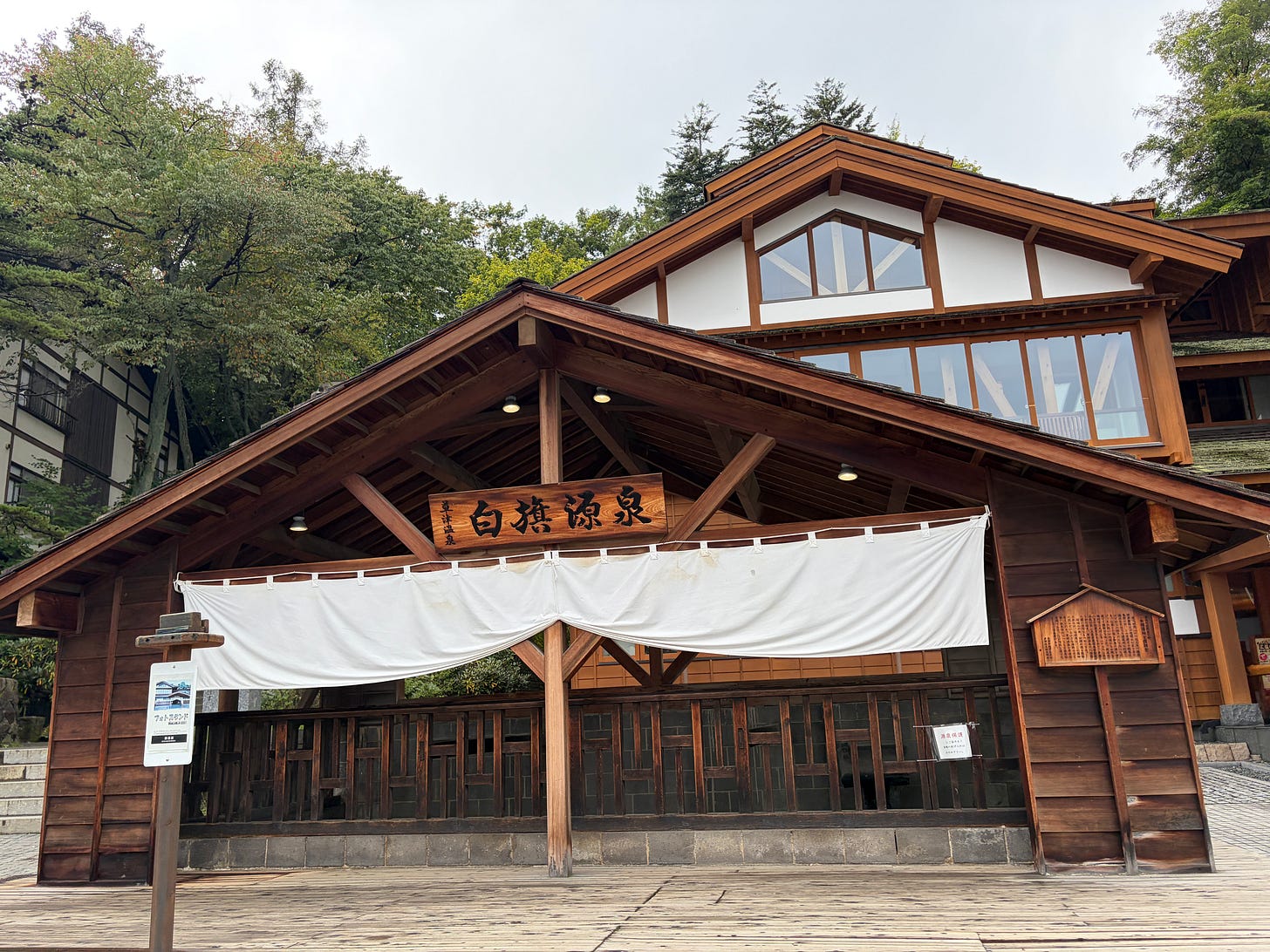
Kusatsu [JAPAN WELLNESS TRAVEL] Tamagawa (Akita): haven’t been. More extreme still, pH near 1.2, and also naturally radioactive — a genuinely unusual combination
Manza (Gunma): haven’t been. Strongly acidic and sulfurous at the same time
My take: no controlled evidence for treating any specific skin condition, whatever the reputation says. Skip it entirely if you have sensitive or broken skin — this is the one type where “intense” isn’t a compliment for everyone