

This wasn’t technically my first time in the prefecture — I’d been once before, years ago, purely for the Nagaoka Fireworks Festival, and left the same night without seeing anything else. That trip didn’t really count. This time I gave Niigata City itself a full day, and it made me realize how much I’d missed on the first visit.
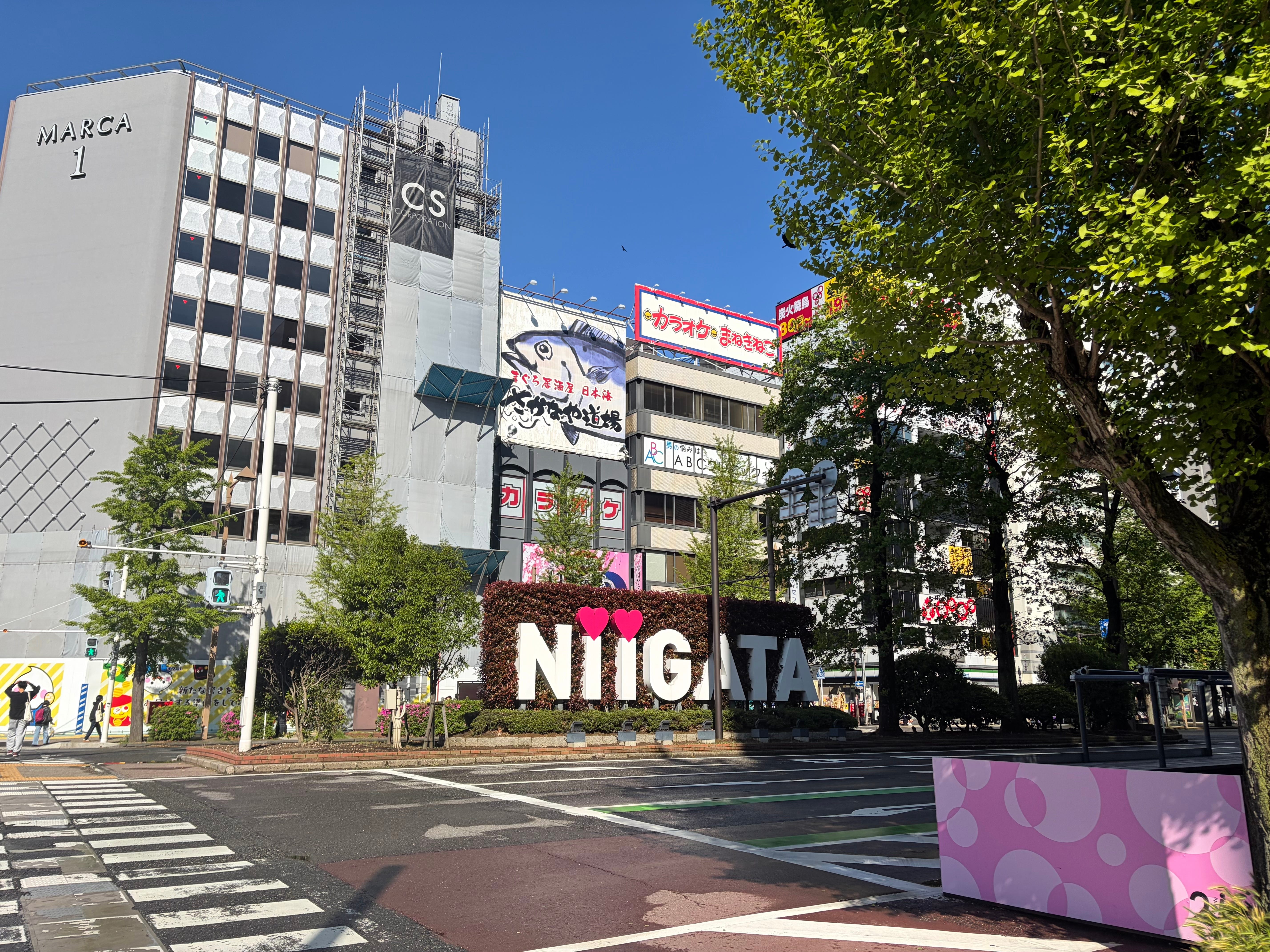
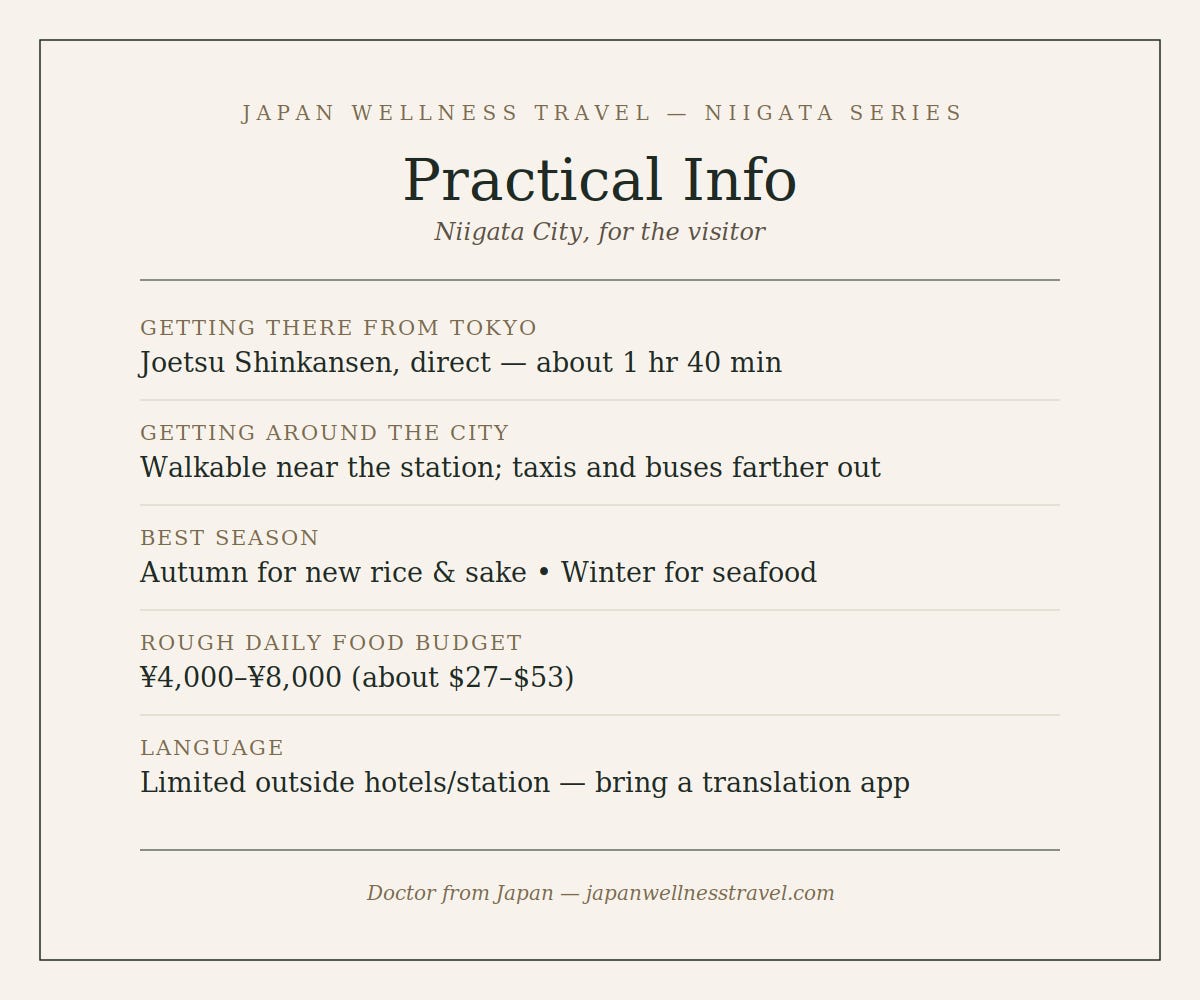
Getting there is easy: Niigata City is about 1 hour 40 minutes from Tokyo Station on the Joetsu Shinkansen, direct, no transfers.
Niigata is rice country, and in Japan, rice country means sake country, and sake country — on the coast, next to the Sea of Japan — usually means very good fish. Echigo-Yuzawa, on the way in from Tokyo, has some of the best onsen towns in the region. But this post is about Niigata City itself, where I spent most of my time, and where I ate better than I expected to.
This is going to run as three posts. Today is the general “what to do” guide. Next is a full explainer on how Japanese sake is actually made, plus the brewery tour I did and where to drink in the city. After that, paid subscribers get the sushi post — including the one restaurant here that has, at different points, been ranked the number one conveyor-belt sushi restaurant in the country on Tabelog.
If you like rice, seafood, or sake — in roughly that order of enthusiasm — this is your guide.
What Actually Makes Niigata Worth the Trip
Three things, in order of how much they’ll surprise you:
The rice. Koshihikari rice is grown all over Japan now, but it started here, and the version grown in Niigata’s own soil and water tastes noticeably different from what you’ll get in Tokyo.
The sake. Niigata has more sake breweries than almost any other prefecture in Japan, because good sake needs the same thing good rice needs — cold water, cold winters, and rice.
The seafood. The Sado Strait, between Niigata and Sado Island, is a genuinely good fishing ground. What lands here in the morning is often on a plate in the city by lunch.
Eat Real Koshihikari — Not the Export Version
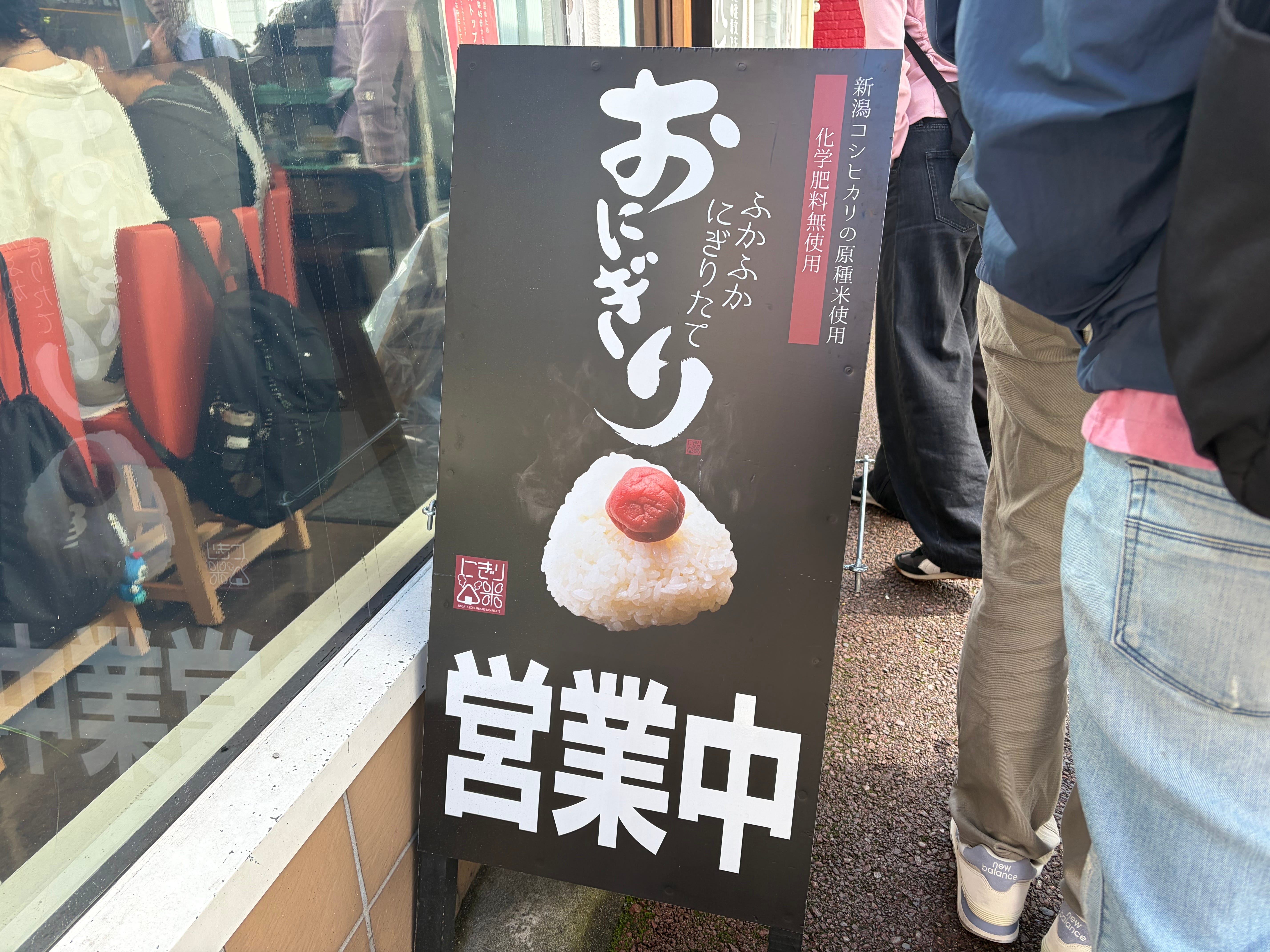
You can buy Koshihikari rice in Tokyo, in Los Angeles, in a supermarket near you. What you can’t easily get outside Niigata is Koshihikari grown here, cooked the way it’s cooked here, and served the same day it was milled.
The easiest way to notice the difference isn’t a formal restaurant — it’s an onigiri (rice ball) shop. A good one will let the rice do the work, with almost nothing added except salt and maybe one simple filling. I’ll point you to my personal favorite in a later post, but for now: if you see a dedicated onigiri-ya near Niigata Station, go in. It’s a five-minute stop that tells you more about why this prefecture is proud of its rice than any museum would.
Sake Country, Twice Over
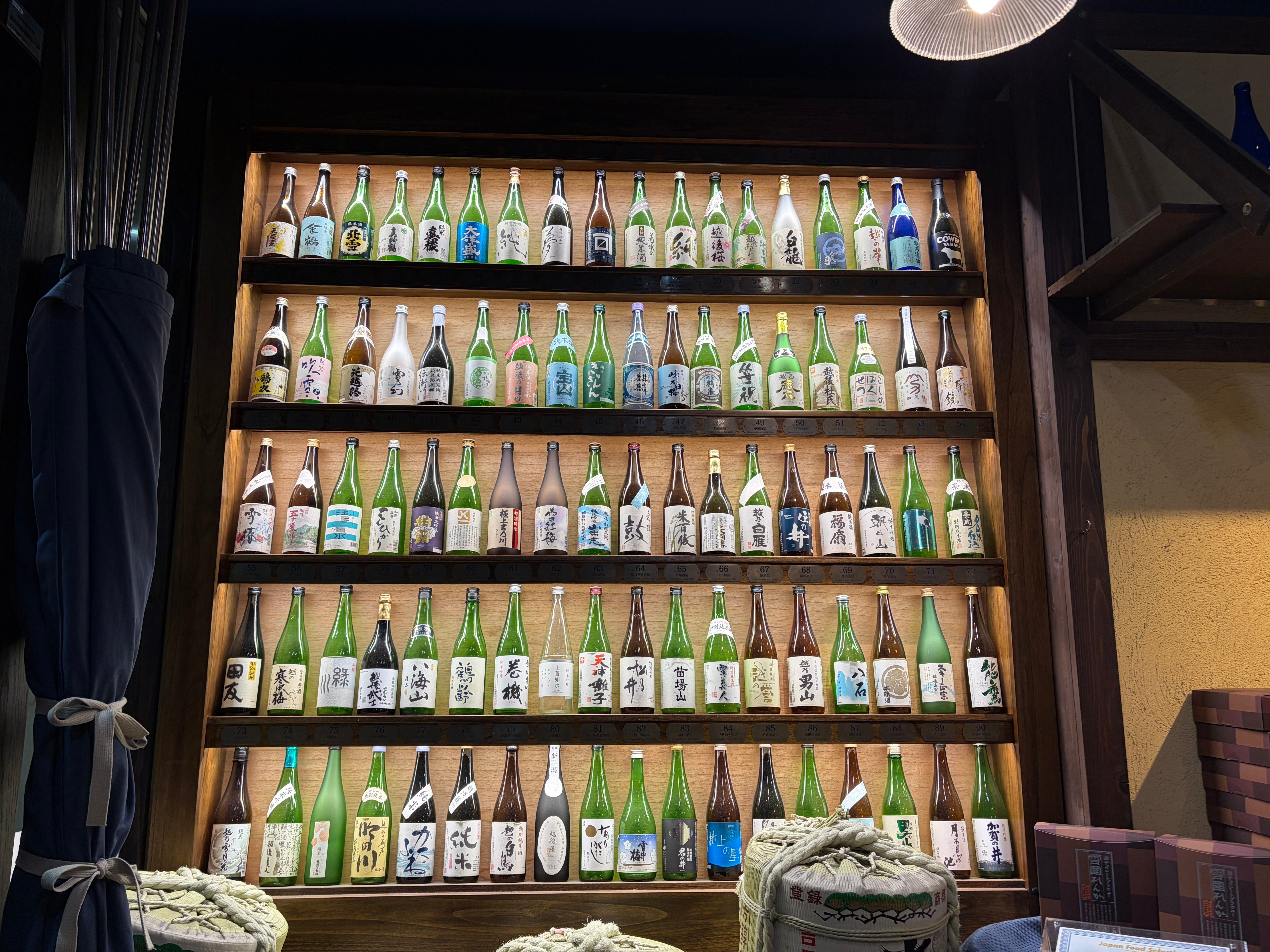
Because rice is Niigata’s identity, sake is too — a large share of the sake made in Japan starts with rice grown here. I’ll go into how sake is actually made in the next post, but there are two things worth doing while you’re in the city itself:
A brewery tour, booked short notice. I visited one and managed to book a slot roughly 30 minutes beforehand — worth asking at your hotel or the tourist information desk if you want to try the same thing, since availability changes day to day.
A sake tasting at Niigata Station. Ponshukan (ぽんしゅ館), right inside the station, lets you sample dozens of Niigata sakes side by side. You rent a small cup, pay for a set of tasting tokens, and pour your own from vending-style dispensers — each with tasting notes posted next to it. It’s genuinely fun even if you don’t know anything about sake going in, and I’ll walk through it properly (including current pricing, since it changed this year) in the next post.
The Seafood Is Better Than Tokyo’s
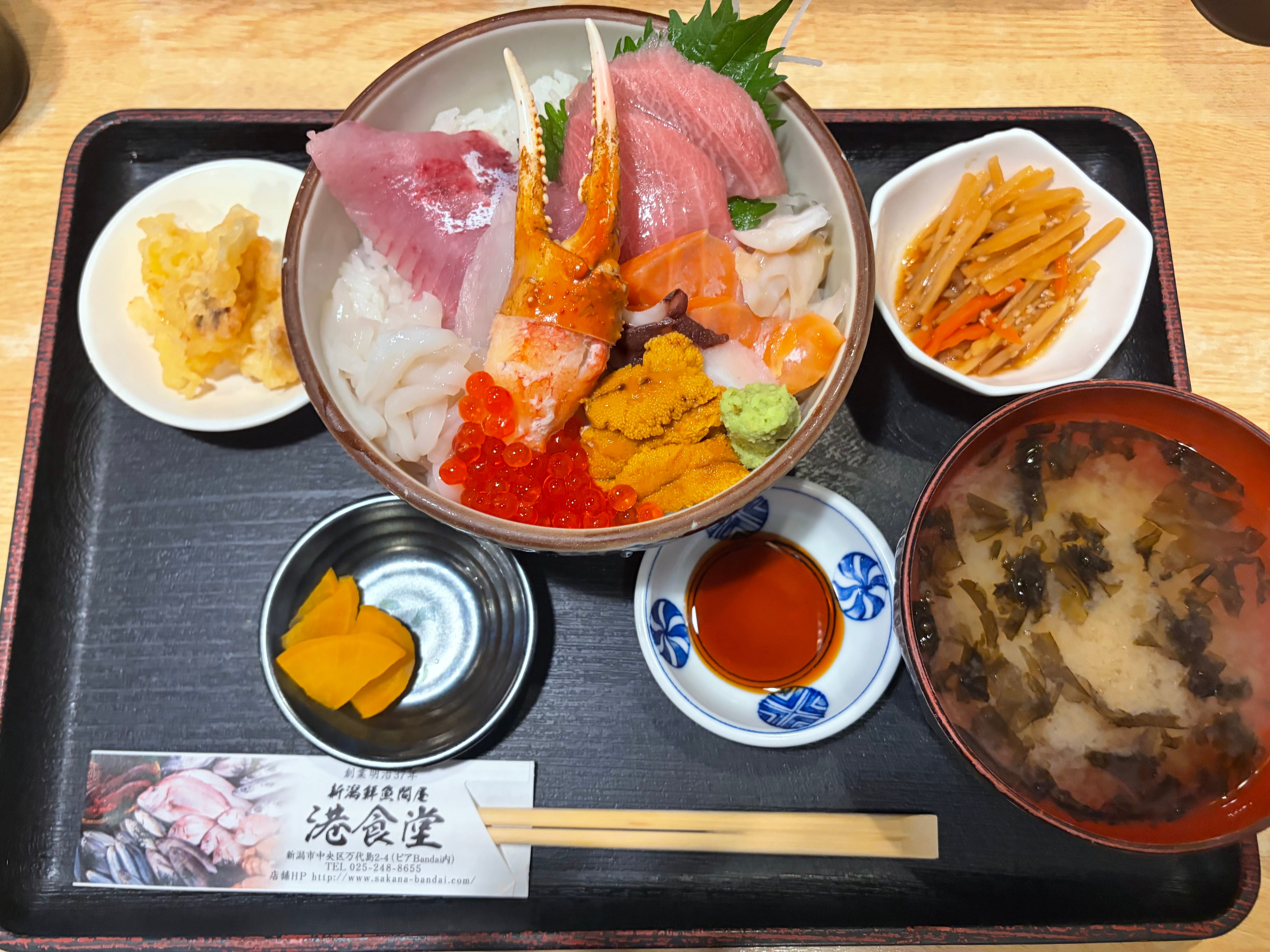
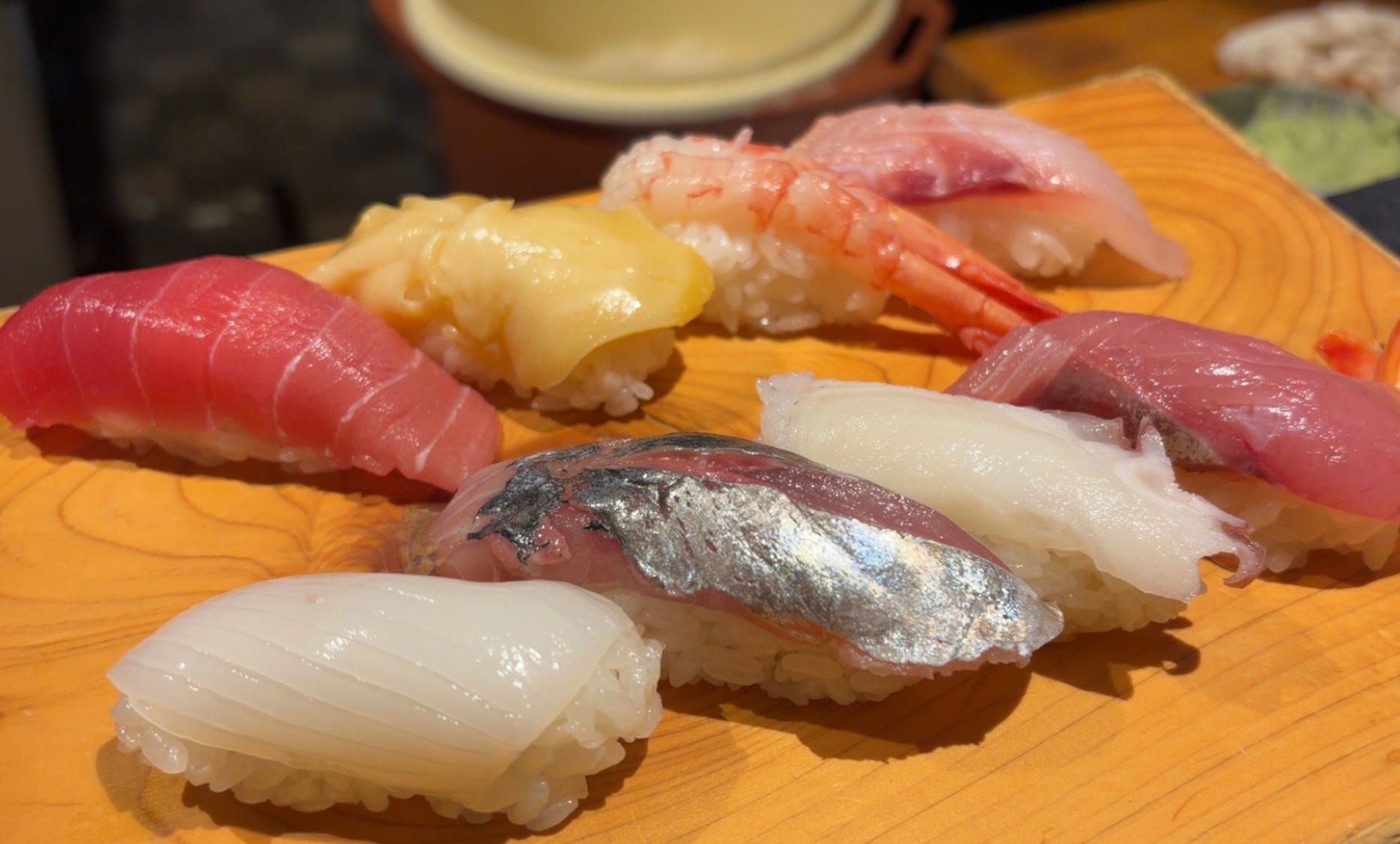
I want to be careful with a claim like that, because “better than Tokyo” gets said about a lot of regional food in Japan and it isn’t always true. Here, I think it holds up — the proximity to the Sado fishing grounds means shorter time between catch and plate.
If you’re a sake person, the natural move is an izakaya that does both well. A few that come recommended locally, in case you get there before I do a full write-up:
Ebisudai (越後の旬と地酒 えびす鯛) — Google Maps
Issei Niigata (壱勢 新潟店) — Google Maps
If sake isn’t your thing but sushi is, an authentic sushi counter like Sushiiwa (すしいわ) — Google Maps — is the better fit. And if you want the single most talked-about sushi experience in the prefecture — a restaurant that’s been ranked the number one conveyor-belt sushi chain in Japan on Tabelog — that’s a full post on its own, coming as part three of this series, for paid subscribers.
Don’t Skip the Soba, or the Wagashi
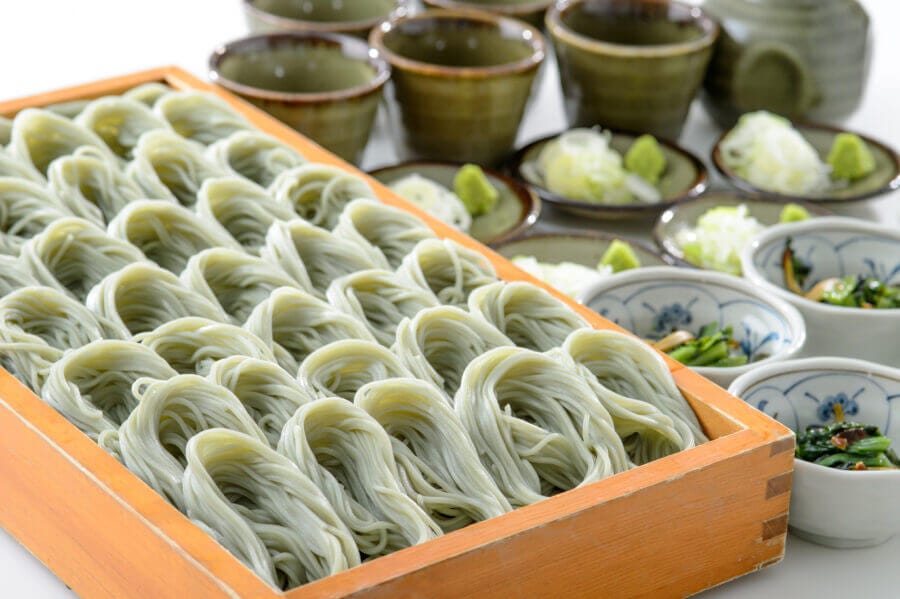
Buckwheat noodles aren’t the first thing people associate with Niigata, but the region has its own style, sometimes called Hegisoba. Suzakaya Soba Niigata Ekimae (須坂屋そば 新潟駅前店) — Google Maps — right by the station, is a reliable, well-regarded spot if you want to try it without hunting.
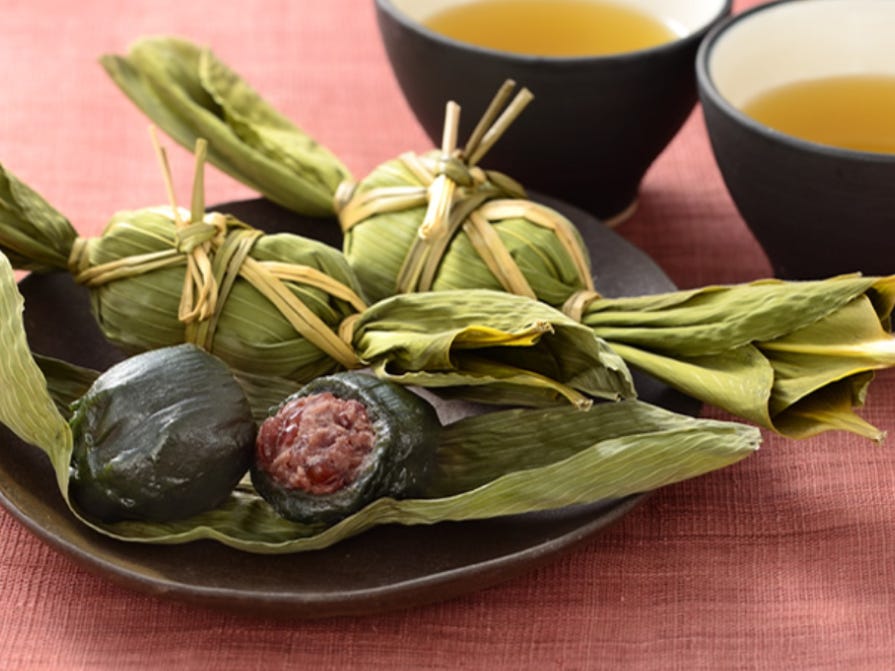
And before you leave, try sasa dango (笹団子) — a traditional wagashi made of sweet rice dough, filled with red bean paste, and wrapped in a bamboo leaf. It’s the kind of thing that looks like a souvenir and turns out to be genuinely good.
What a Doctor Notices About the Way People Eat Here
I can’t turn this off, so here’s the honest version: this is a diet built almost entirely around fermented and minimally processed foods — sake and miso from fermentation, rice as the caloric base rather than refined flour, and fish eaten close to raw and close to fresh, which preserves the omega-3 fats that get damaged by heavy cooking. None of that makes Niigata a “superfood destination” — it’s just a place where the traditional Japanese diet, the one linked in the research to lower cardiovascular risk, is still closer to how people actually eat day to day.
The Honest Downside
A few things worth knowing before you go, so the trip isn’t more friction than it needs to be:
Many of the best places — the izakaya, the smaller sushi counters — have little to no English menu. Google Translate’s camera function earns its keep here.
Cash is still more useful than you’d expect at smaller, older establishments.
The city itself is compact and walkable near the station, but the best onsen towns (Echigo-Yuzawa) and the fireworks in Nagaoka are separate day trips, not something you’ll fit into one afternoon.
If sake tasting is part of your plan, you’ll want to not be driving afterward — obvious, but easy to forget when the tasting counter is right there at the station.
Practical Info
Frequently Asked Questions
Is Niigata worth visiting if I only have a few days in Japan? If your priority is food and sake specifically, yes — it’s close enough to Tokyo (about 2 hours by Shinkansen) that it works well as a 1–2 night trip rather than requiring a full separate itinerary.
What’s the best time of year to visit Niigata for food? Autumn, when the new rice and new sake (shinshu) are released, and winter, when cold-water seafood like buri (yellowtail) is at its best.
Do I need to speak Japanese to enjoy Niigata’s food scene? No, but you’ll rely on translation apps more than you would in Tokyo, especially at smaller izakaya and sushi counters.
Is Niigata sake different from sake made elsewhere in Japan? Yes — it tends toward a drier, cleaner style often described locally as tanrei karakuchi. I cover why in the next post.
Can I visit Niigata as a day trip from Tokyo? Yes, technically — the Shinkansen makes it possible — but you’ll get far more out of it with at least one overnight stay, especially if you want to do a sake tasting without rushing.
Is Niigata safe and easy for solo travelers? Yes. It’s a mid-sized Japanese city with the same general safety and infrastructure you’d expect anywhere else in the country.
A Final Word, as a Doctor
I go to a lot of places in Japan for this newsletter, and not all of them earn a three-part series. Niigata did, almost by accident — I went for the rice and the sake, and left thinking more about the fish than either. That’s usually a good sign a place is worth a second visit.
Part 2 is the sake deep dive: how it’s actually made, my brewery tour, and where to drink it properly in the city. Part 3, for paid subscribers, is the sushi restaurant that made me understand why people here take their seafood so seriously.
If you’re not a paid subscriber yet, now’s the moment — Part 3 is for paid readers only.
⚕️ This article is for education, not personal medical advice. I’m a doctor, but I’m not your doctor — for decisions about your own health, please see a physician who can examine you.
Thank you Dr Miki. Love the combo of travel guide and health benefits. I didn’t realise Niigata was so easy to get to from Tokyo. Looking forward to the sushi post!