

I’d been tired for weeks. Long days at work, and a lower back that ached through all of it, the kind a normal weekend doesn’t fix. I wanted to be somewhere hot and quiet, and far from my desk.
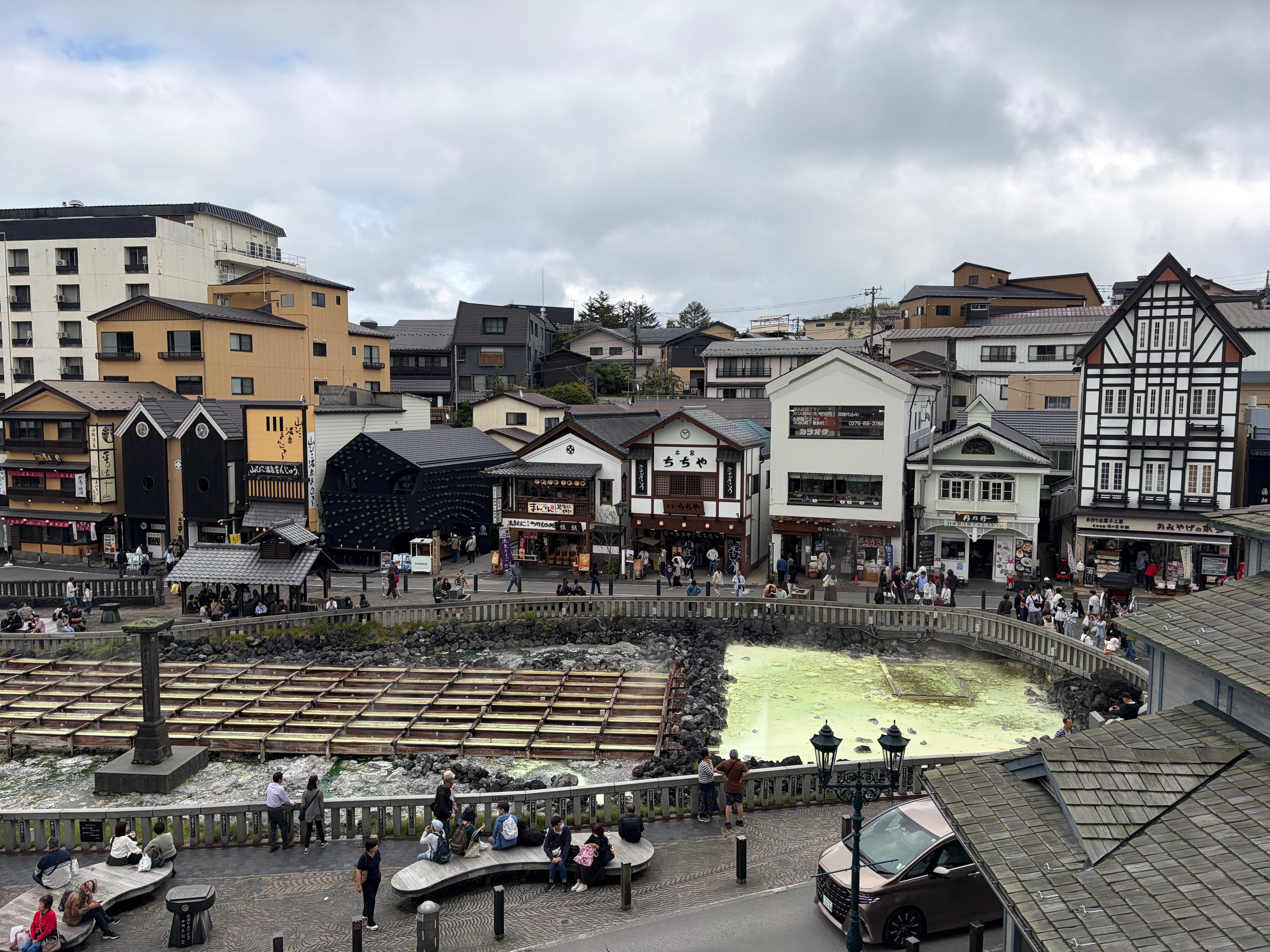
So I finally went to Kusatsu Onsen, a place I’d wanted to visit for a long time.
Here’s the odd part. Kusatsu has been voted Japan’s number one hot spring for over twenty years in a row, in an annual survey of travel industry professionals. Japanese people know it as the one. Foreigners mostly haven’t heard of it. I heard Japanese almost everywhere and English almost nowhere.
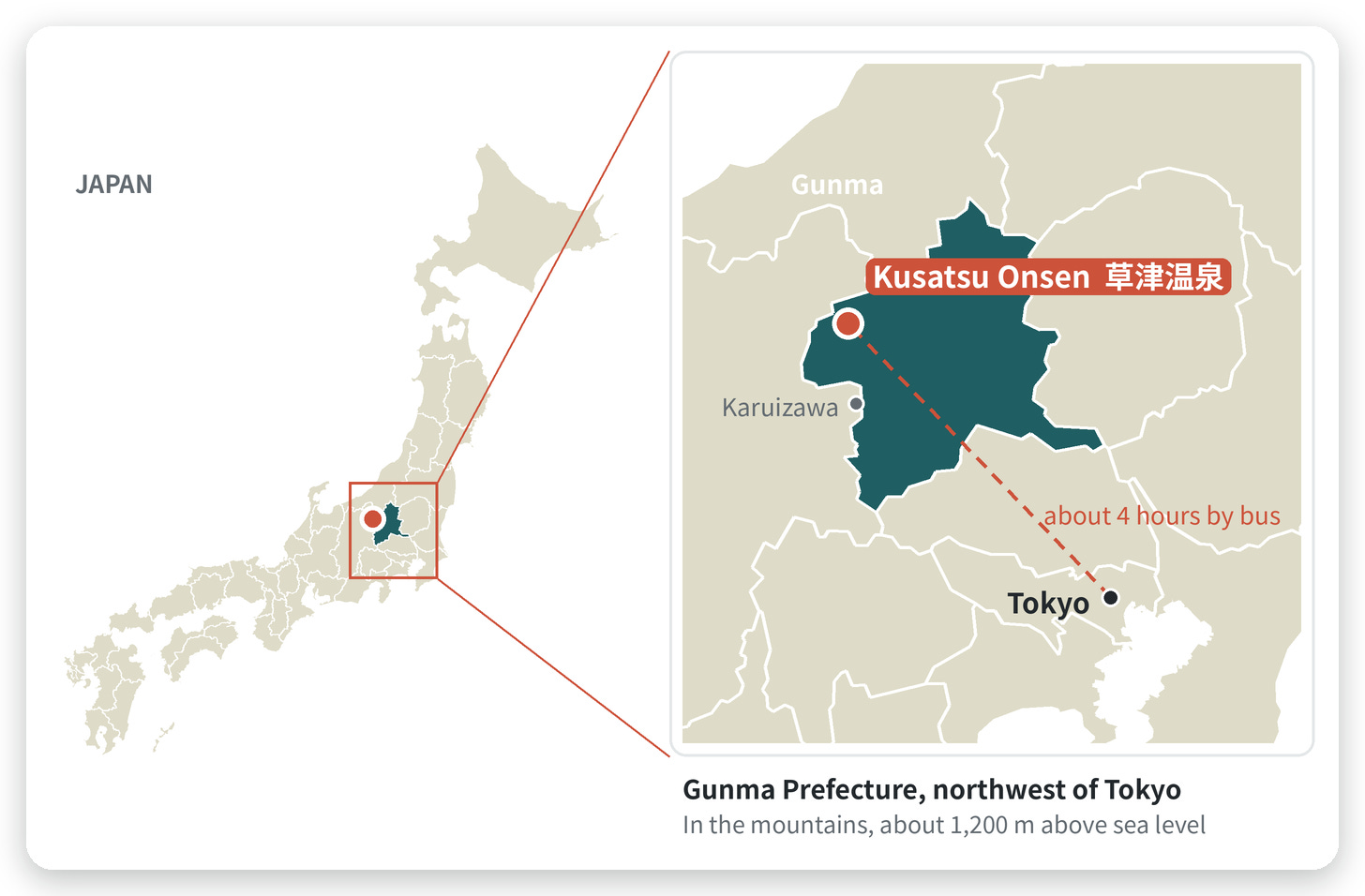
Where is it? Kusatsu sits in the mountains of Gunma Prefecture, northwest of Tokyo, at about 1,200 meters above sea level. It’s roughly four hours from Shinjuku on a direct bus, or about three hours by train plus a short bus. If you know Karuizawa, it’s about an hour’s bus ride from there.
Who will love Kusatsu?
Onsen lovers who want the real thing. Strong, acidic water pouring straight from the source.
Walkers and snackers. A small town where you eat your way from one bath to the next.
Anyone who wants an easy trip from Tokyo without the tourist crowds. It’s close, and hardly any other foreigners go.
What’s in this post, and what’s in the paid one
Free, right here:
What it was like to arrive, and the hotel we stayed at
The four baths we went in, with my own review of each
The hot-water centerpiece of the town, the thing in every photo
What I ate and loved
Paid, in the next post:
Exactly how to get there: bus or train, with real times and fares
Bath prices and hours, plus a ticket that costs less than paying bath by bath
My one-night, two-day route
Which day of the week matters, and the show you can actually join in
The udon shop I’d send you to (it isn’t the one in this post)
The mistakes I made
And I’ll answer your questions about your own trip, if you’re a paid subscriber
Arriving
The smell hit me first. Before we’d even reached the hotel, the whole town smelled of sulfur, that boiled-egg smell. I’d wanted to come for so long that it felt like a good sign.
We stayed at Hotel Ichii (ホテル一井), right in the very middle of Kusatsu, and it was a really luxurious, lovely place. I’ll tell you more about it in more details in my paid post. For now, all we did was drop our bags there before heading out.
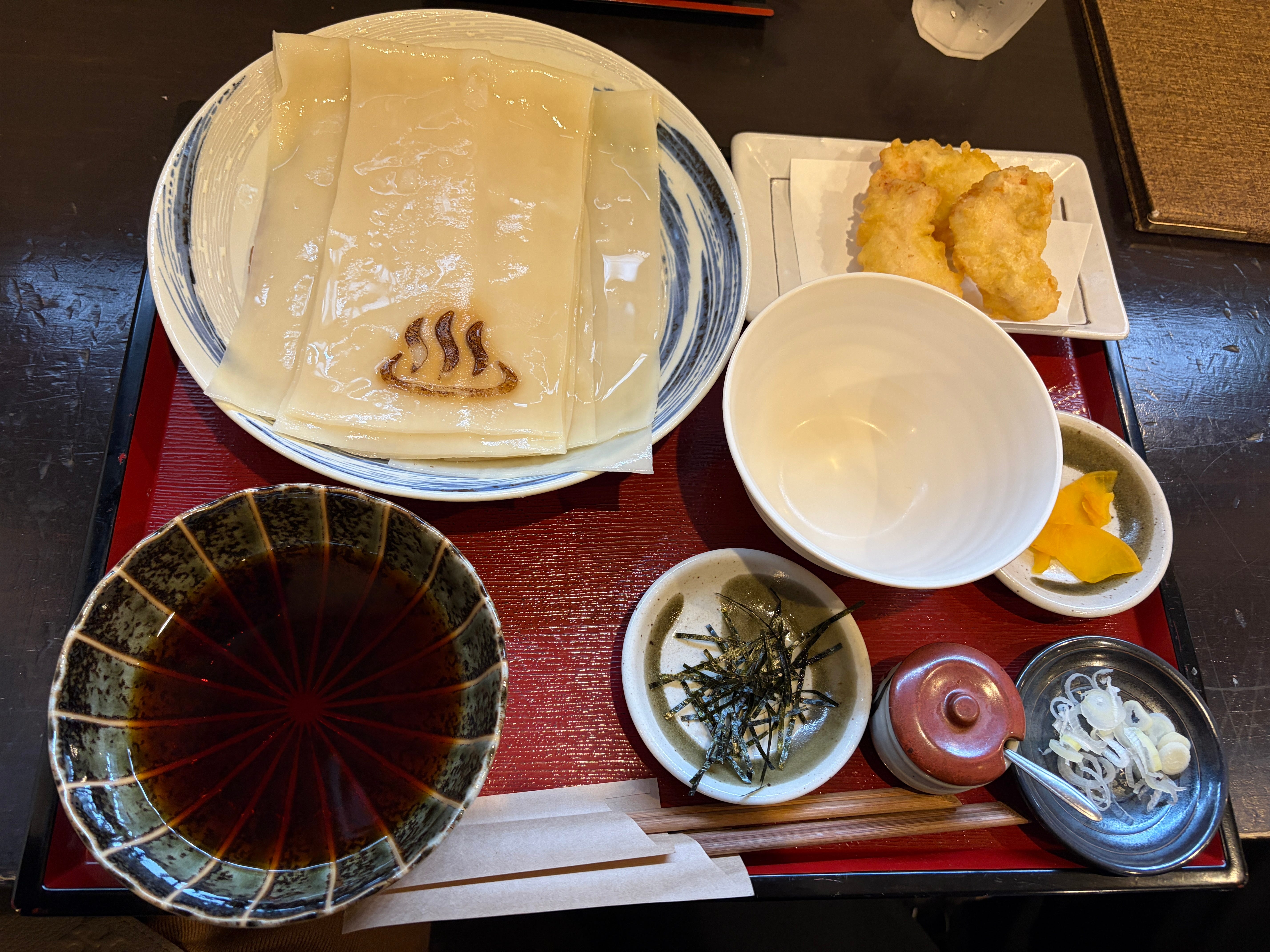
Lunch came first, though. At that hour the popular udon shops were crowded. 上州亭 (Joshutei) was a little emptier than the others, so that’s where we went. It was very good: himokawa udon, a flat, wide noodle from Gunma, chewy and filling. But I’ve had better udon on this trip, and I’ll tell you where in the paid post. (How much do you trust Google Maps reviews? I can never decide, haha.)
The best way I can describe the town is a small onsen amusement park. It isn’t big. You can cross the center on foot in a few minutes. But it’s packed with things to do: public baths, streets of snacks, a show, foot baths tucked into corners. The scale of what’s inside is bigger than the town looks.
Then we went into the baths.
The four baths we went in
I took four baths: three public bathhouses, and the one at our hotel. We did some of them that first day, and the rest the next day after we checked out. They’re quite different from each other, so here’s what each one is like, and what I thought.
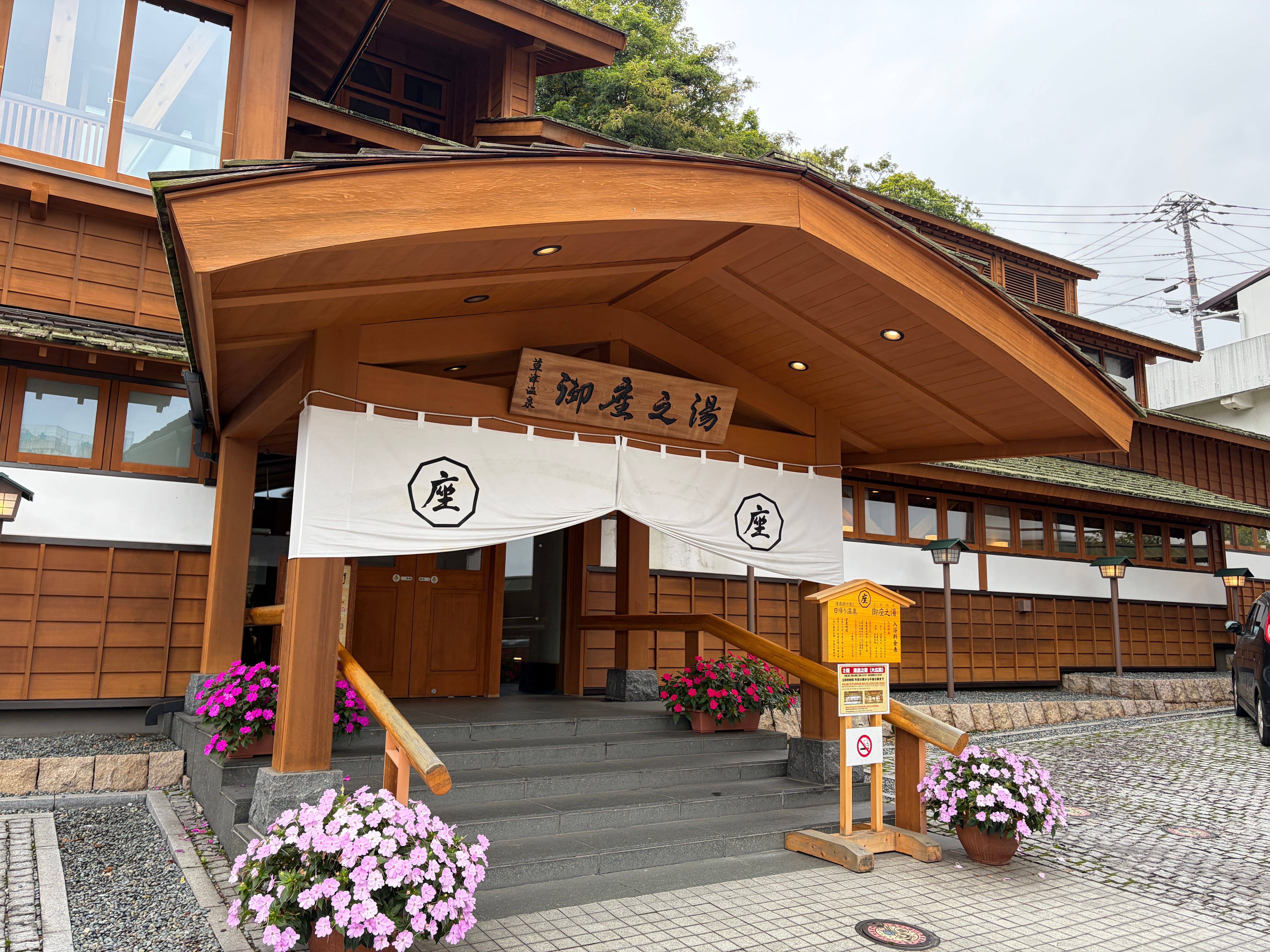
御座之湯 (Goza-no-yu). The one closest to the middle of town, in a wooden building styled after bathhouses of the Edo and Meiji eras. There are two baths, one wood (木之湯) and one stone (石之湯), and they swap between men and women from day to day. It draws on two springs: one softer on the skin, and one hotter and more acidic. Upstairs there’s a large tatami room for resting after your bath.
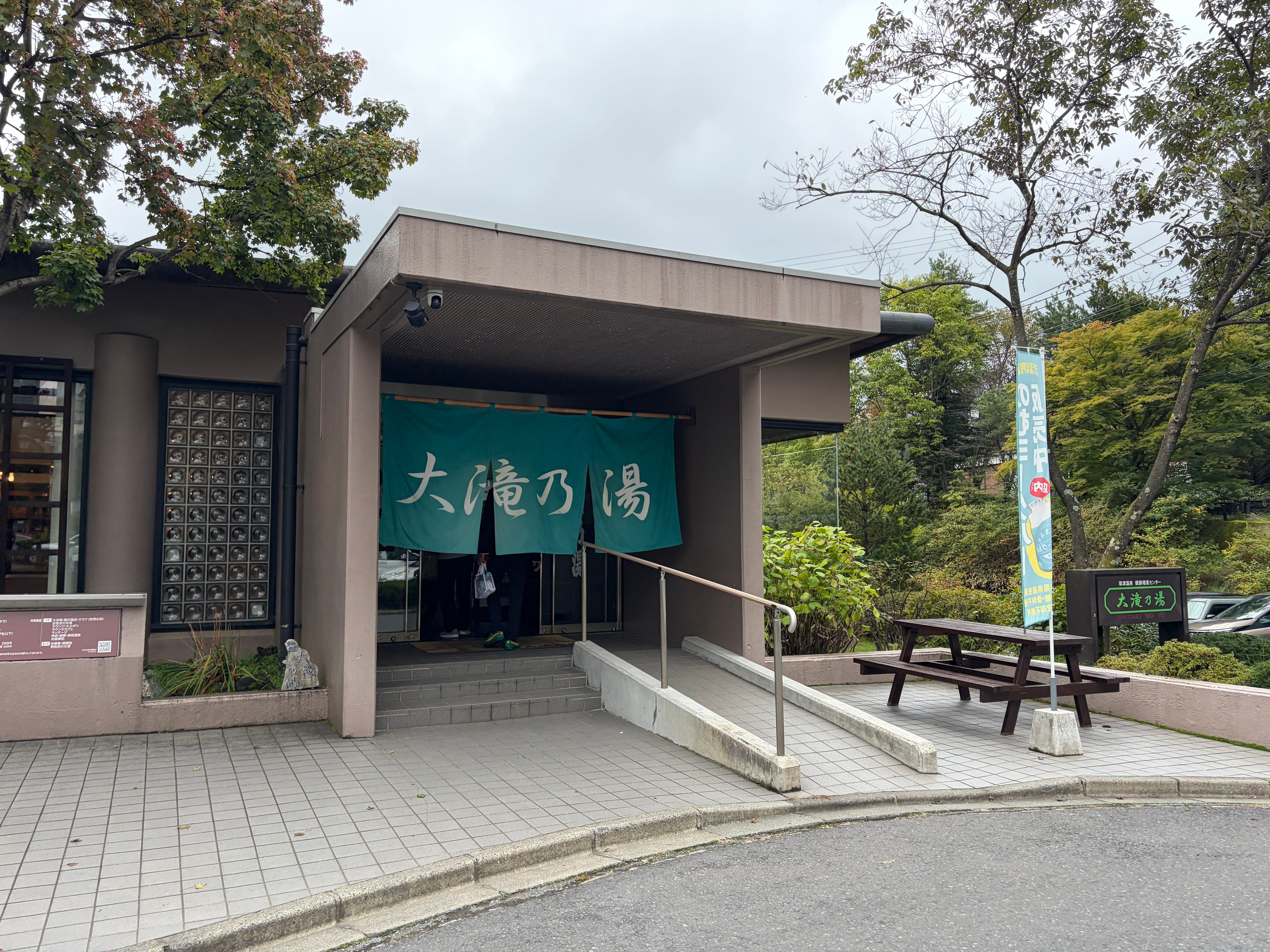
大滝乃湯 (Otaki-no-yu). This one has the 合わせ湯 (awase-yu, “combination bathing”): several baths at different temperatures, and you move from cooler to hotter so your body gets used to the heat in steps. My review: the combination bathing is the best part. The space feels open and airy, and the warm wood all around is lovely. It’s a 5–10 minute walk uphill from the center, so it’s a little calmer too.
西の河原露天風呂 (Sainokawara Rotenburo). The big outdoor bath, about 500 square meters, set inside a park and surrounded by nature. My review: this is the best open-air bath of the trip. There’s no wall closing you in. The outdoor baths I know in Tokyo have a fence for a view, and this was completely different: the view is the trees. If you only do one outdoor bath in Kusatsu, do this one.
The bath at our hotel. The fourth bath was at the hotel, and it was very good too.
The water in all of them is strongly acidic, around pH 2. That’s part of why Kusatsu feels so distinctive.
The hot-water field in the middle of town
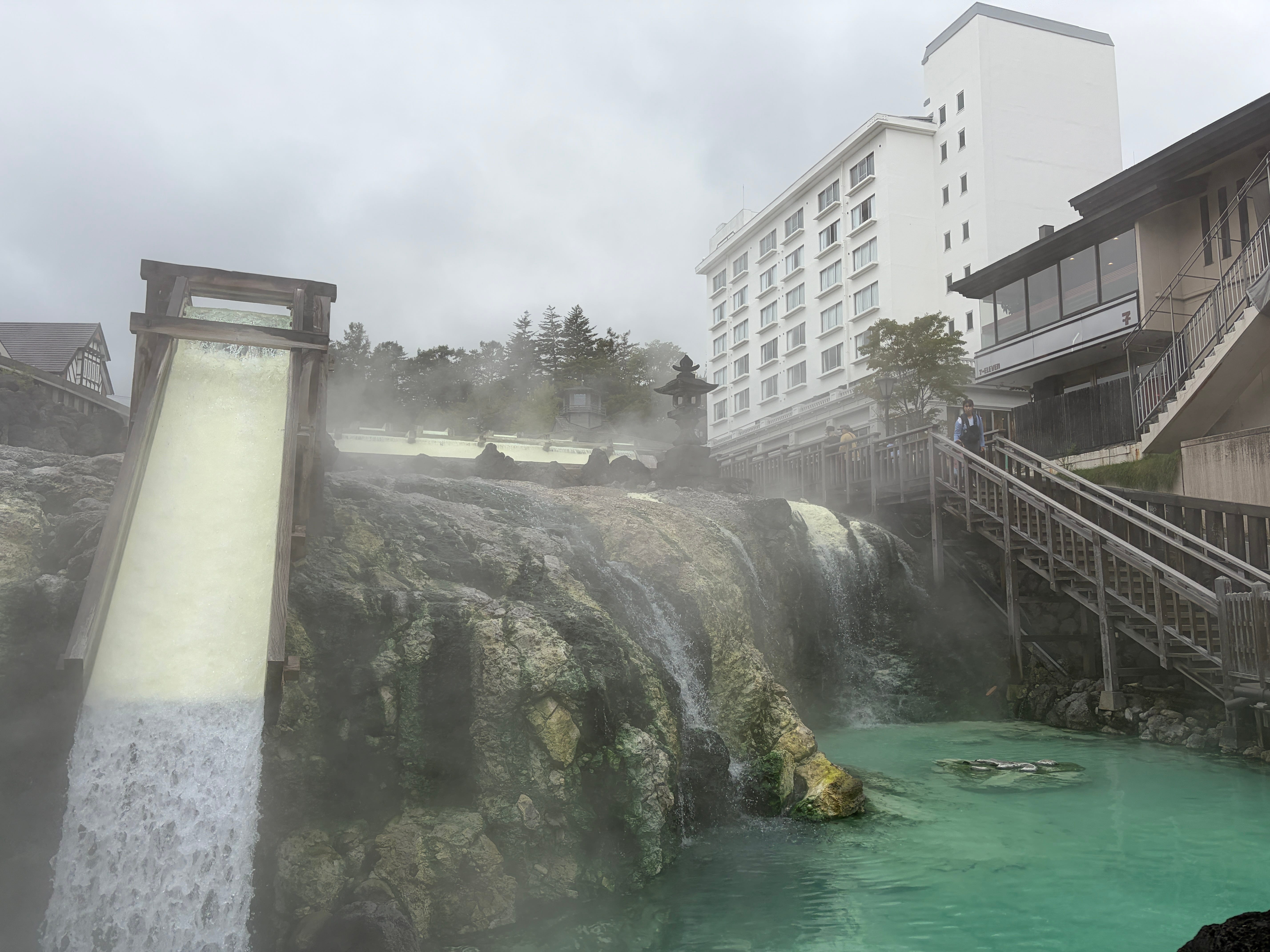
Everything in Kusatsu circles around one thing: the yubatake (湯畑), which literally means “hot water field.” It’s a wide channel in the center of town where steaming spring water runs through long wooden troughs. The spring comes out far too hot to bathe in, so it flows along the wood and cools naturally, rather than being watered down. Then it’s piped to the baths and hotels around town. Kusatsu produces around 32,000 liters of hot water every minutes.
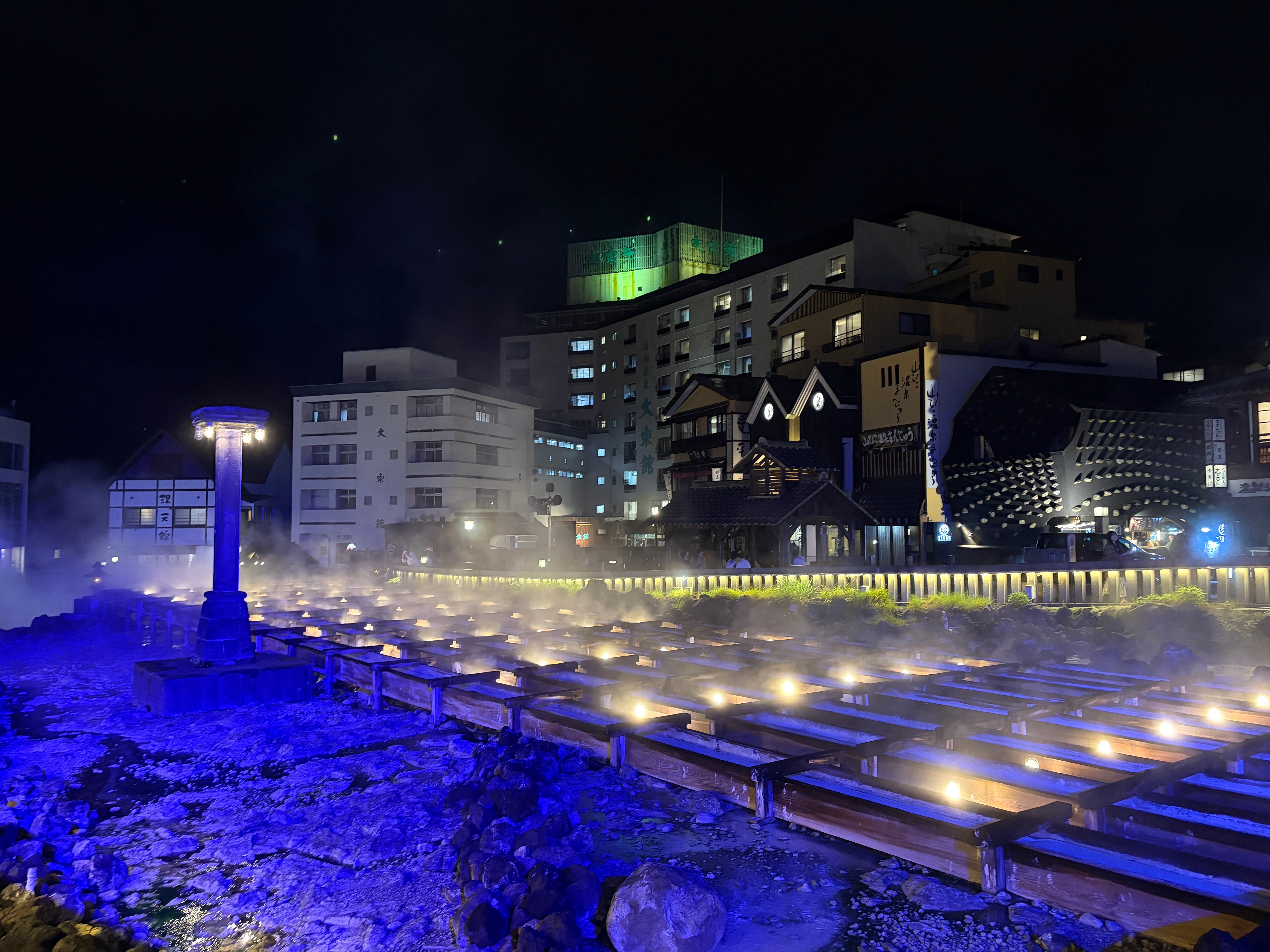
In daytime it’s somewhere to stop and stare. At night it’s lit up, and that was my favorite version. There’s a free foot bath beside it too, so you can sit with your feet in the water and watch the steam.
What I ate (the delicious ones)
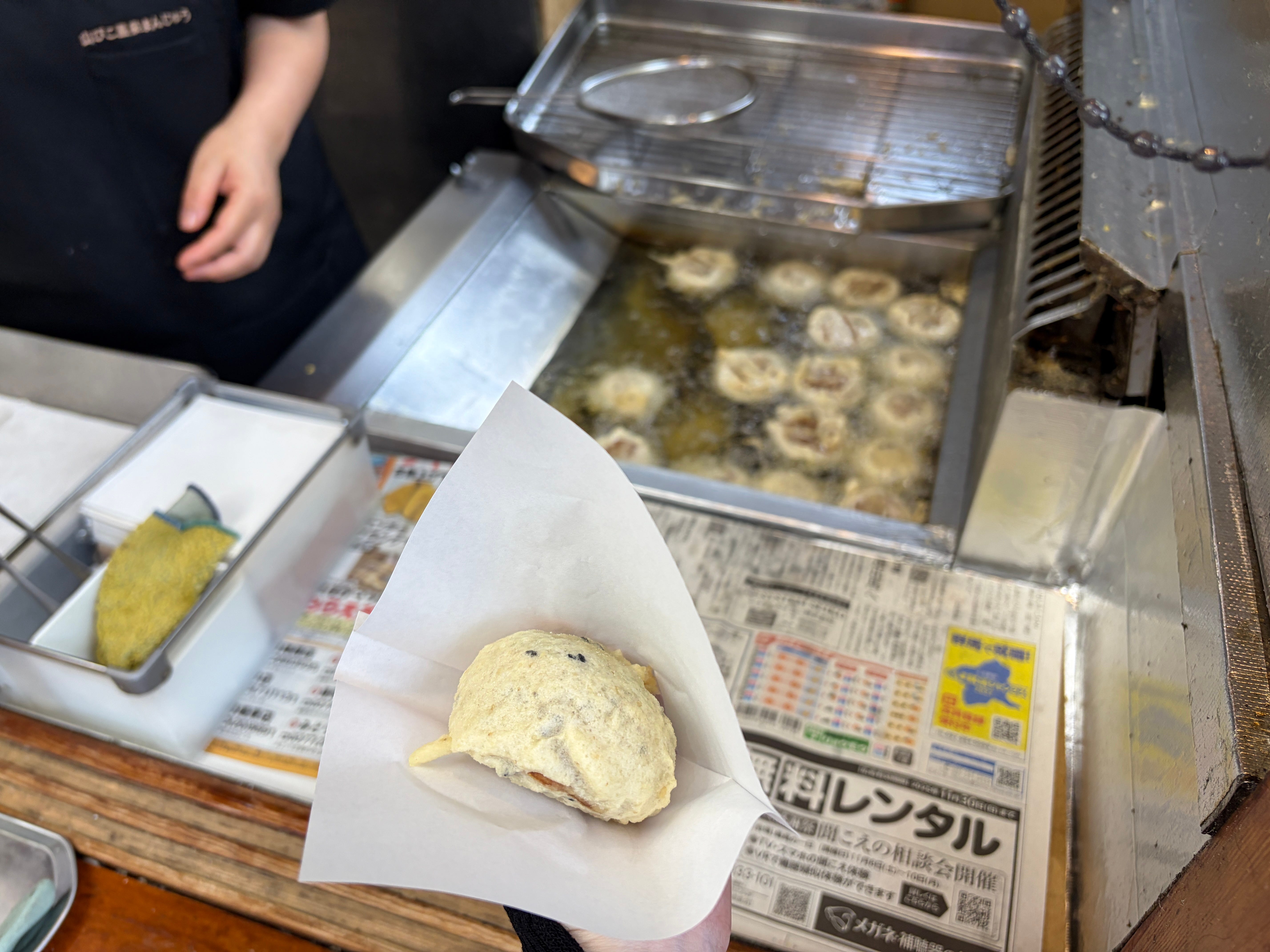
Agemanju (揚げまんじゅう). A deep-fried version of the usual steamed bun, sold from stalls around the center. Hot, simple, very good.
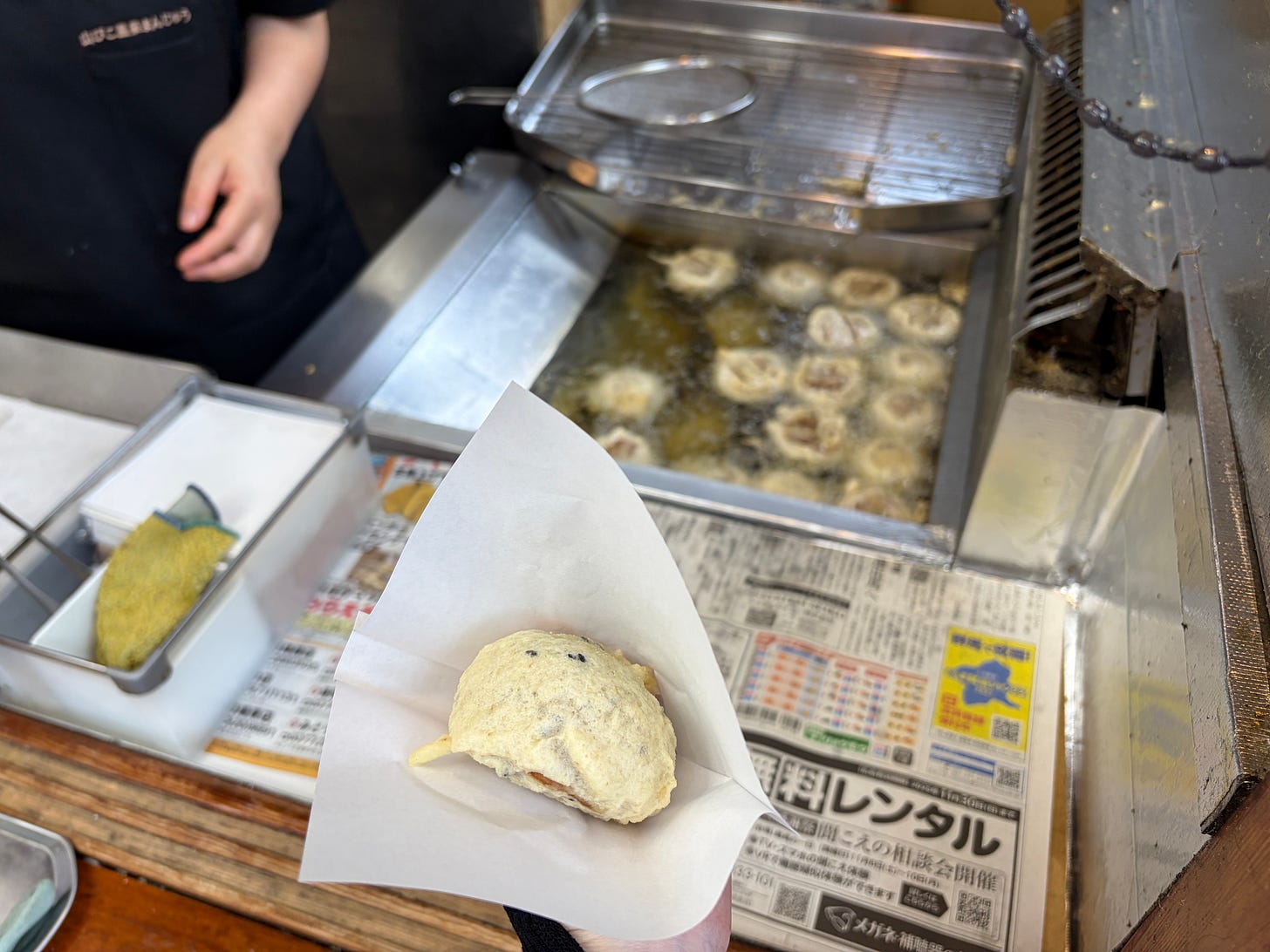
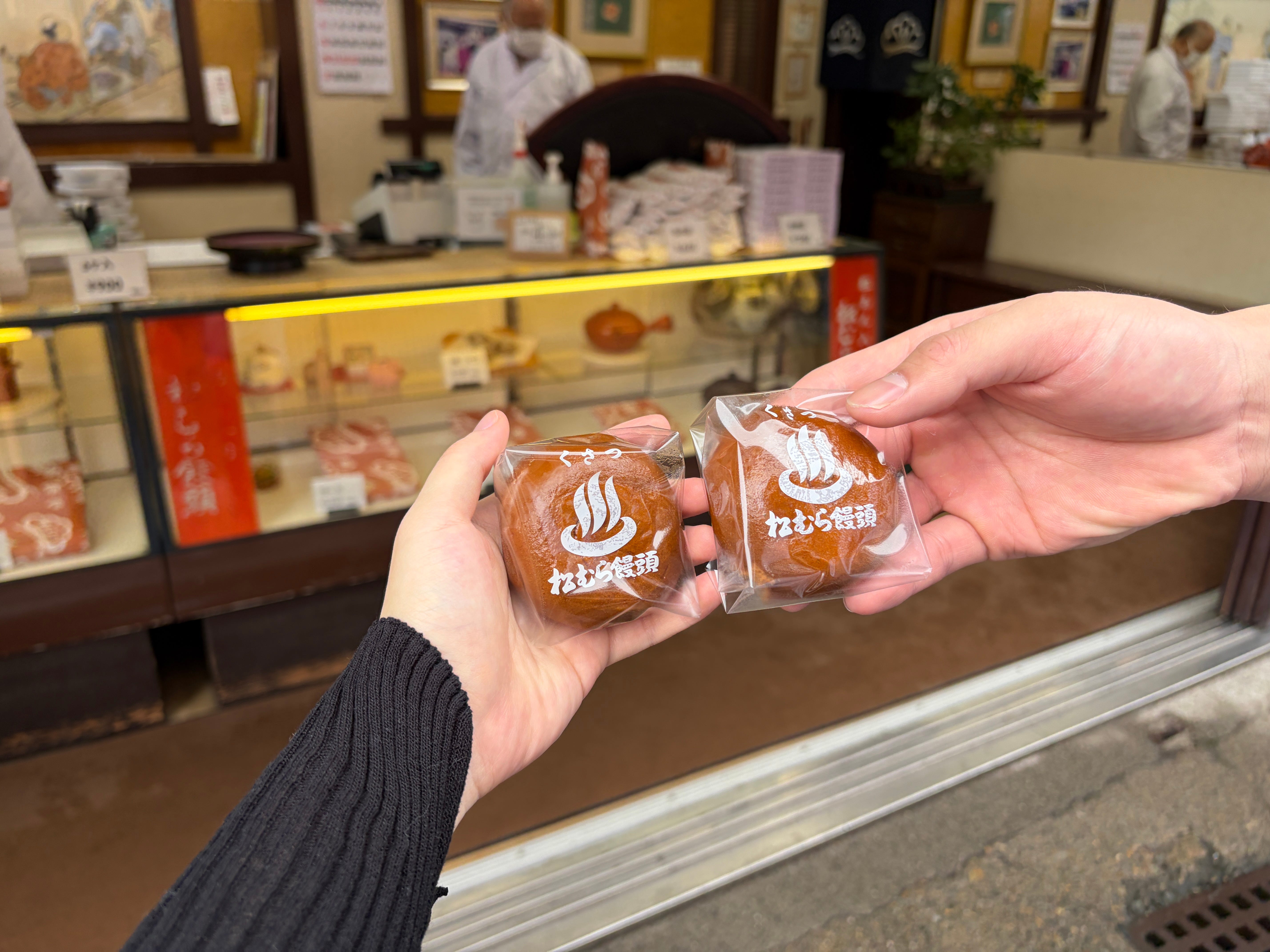
Agemanju [JAPAN WELLNESS TRAVEL] Matsumura manju (松村まんじゅう). The other manju I’d tell you to try. It’s worth eating next to the fried one, just to compare.
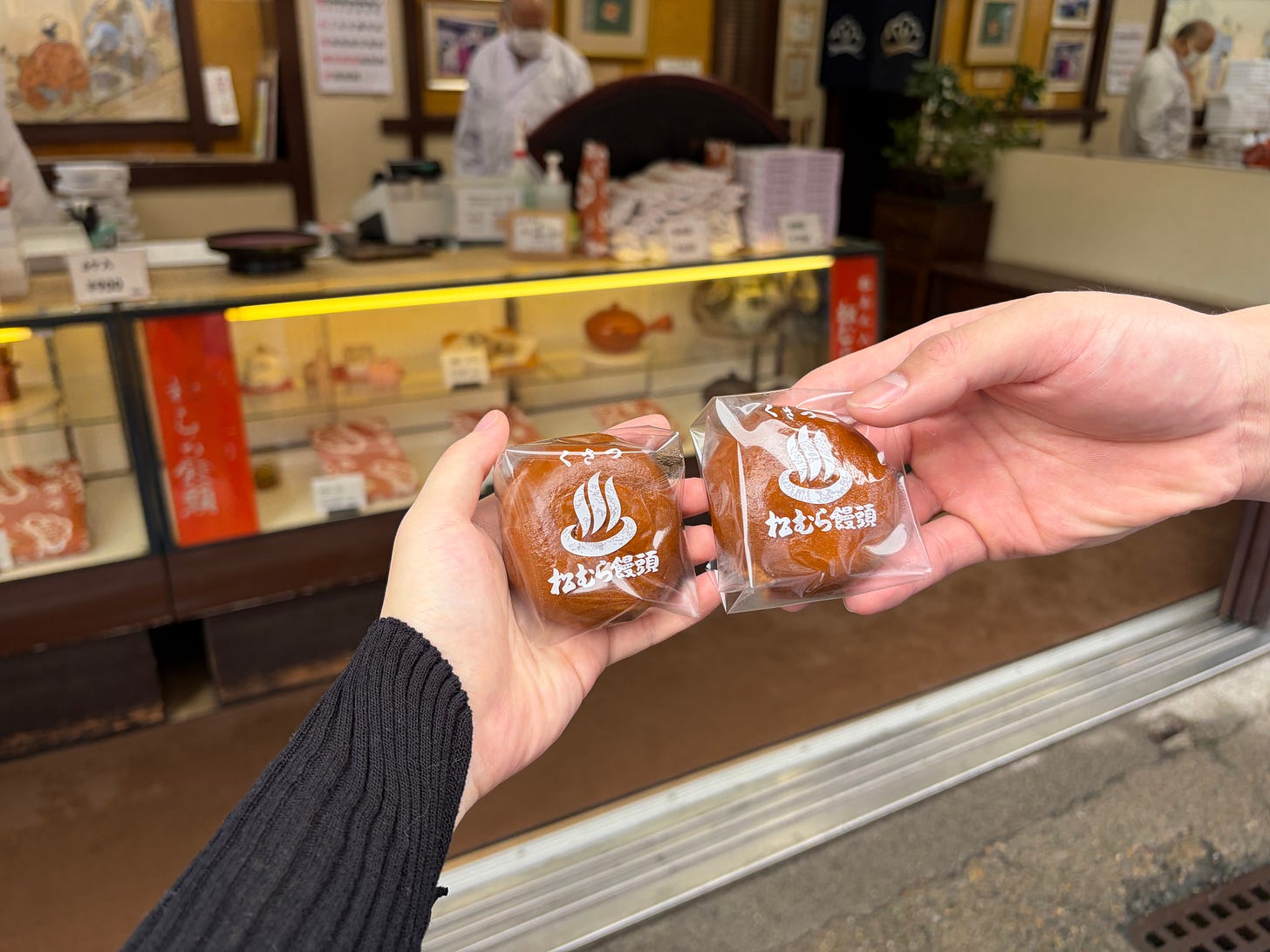
Matsumura manju [JAPAN WELLNESS TARVEL]
Coming up in the paid post
Hotel Ichii deserves a proper write-up, so that’s in the next post, for paid subscribers. I’ll show you the hotel in photos, and there’s a lot more I haven’t told you yet: how to get there from Tokyo with real times and fares, the ticket that makes the three baths cheaper, which day of the week to go, my route hour by hour, the udon shop I’d send you to, and the mistakes I made so you don’t have to.
If this made you think “Kusatsu sounds good,” I’d love to have you with me for the rest. Become a paid subscriber and you’ll get all of it.
And if you’ve been to Kusatsu, please tell me in the comments. What was your favorite bath? If you’re planning a trip and have questions, paid subscribers can ask in the comments of the next post, and I’ll answer.