

Just minutes from the famous Churaumi Aquarium, there is a place in Okinawa where time seems to slow down.
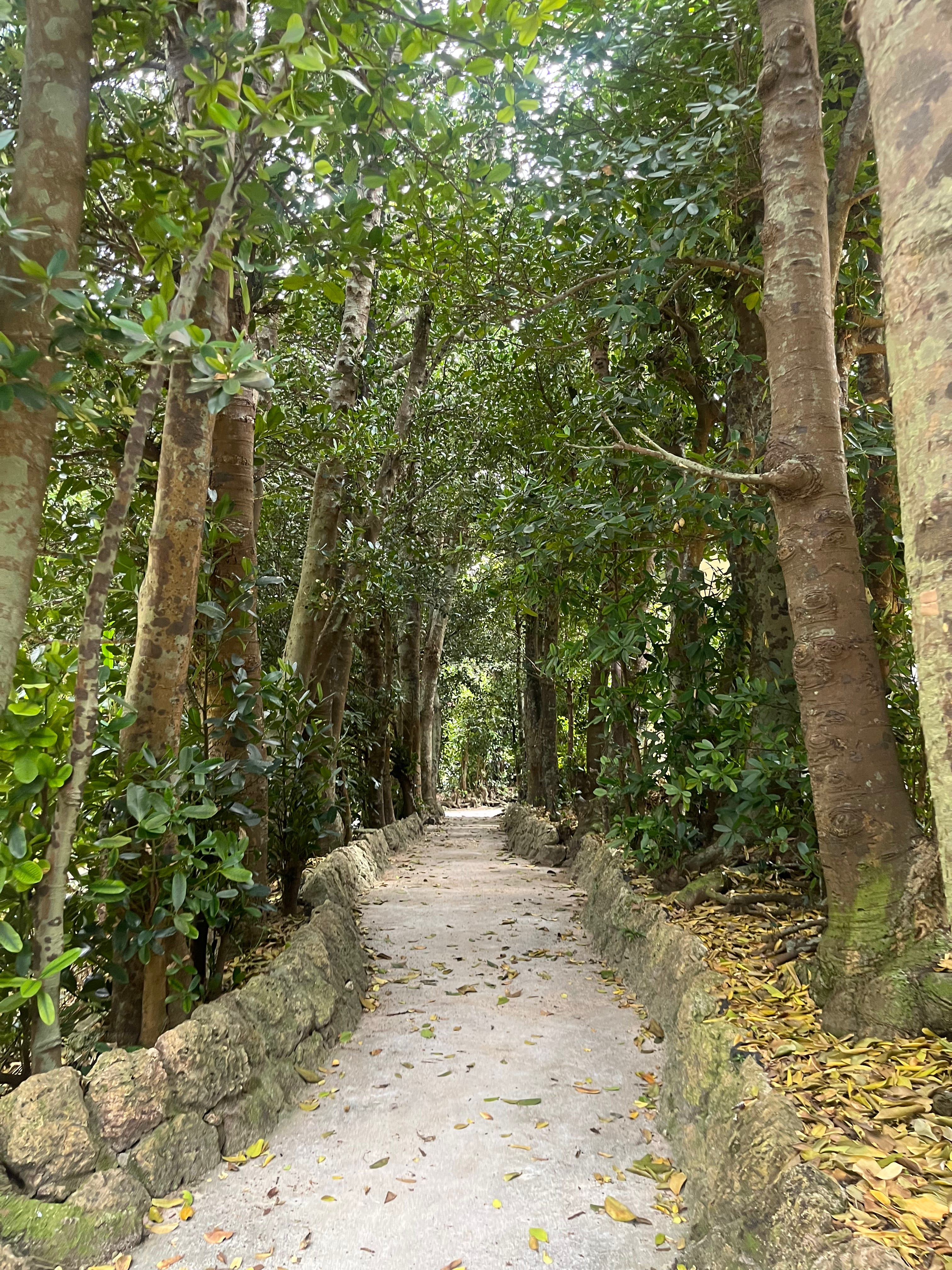
The Fukugi Tree Tunnel in Bise was not just a scenic walkway — it was a living village landscape wrapped in centuries-old trees, ocean air, and silence so deep that you begin to notice your own thoughts again.
Unlike Tokyo, where everything moves fast and loud even in quiet corners, this place feels almost like the world has pressed pause. Walking here, I remember thinking that this is something I could never experience in the middle of a city like Tokyo — not just visually, but mentally. It is a kind of stillness that does not exist in modern urban life.
The more I walked, the more I realized this is not a “tourist attraction.”
It is a space where nature, memory, and daily life still coexist.
What Is the Fukugi Tree Tunnel in Okinawa?
Located in Bise, Motobu Town in northern Okinawa, the Fukugi Tree Tunnel is one of Japan’s most beautiful surviving traditional village landscapes.
It features:
Thousands of Fukugi trees (“Fuku-gi,” meaning trees of happiness)
A green tunnel stretching over 1 kilometer
Trees planted over 100–300 years ago
A village still shaped by wind, sea, and nature
A landscape designed to protect life from typhoons
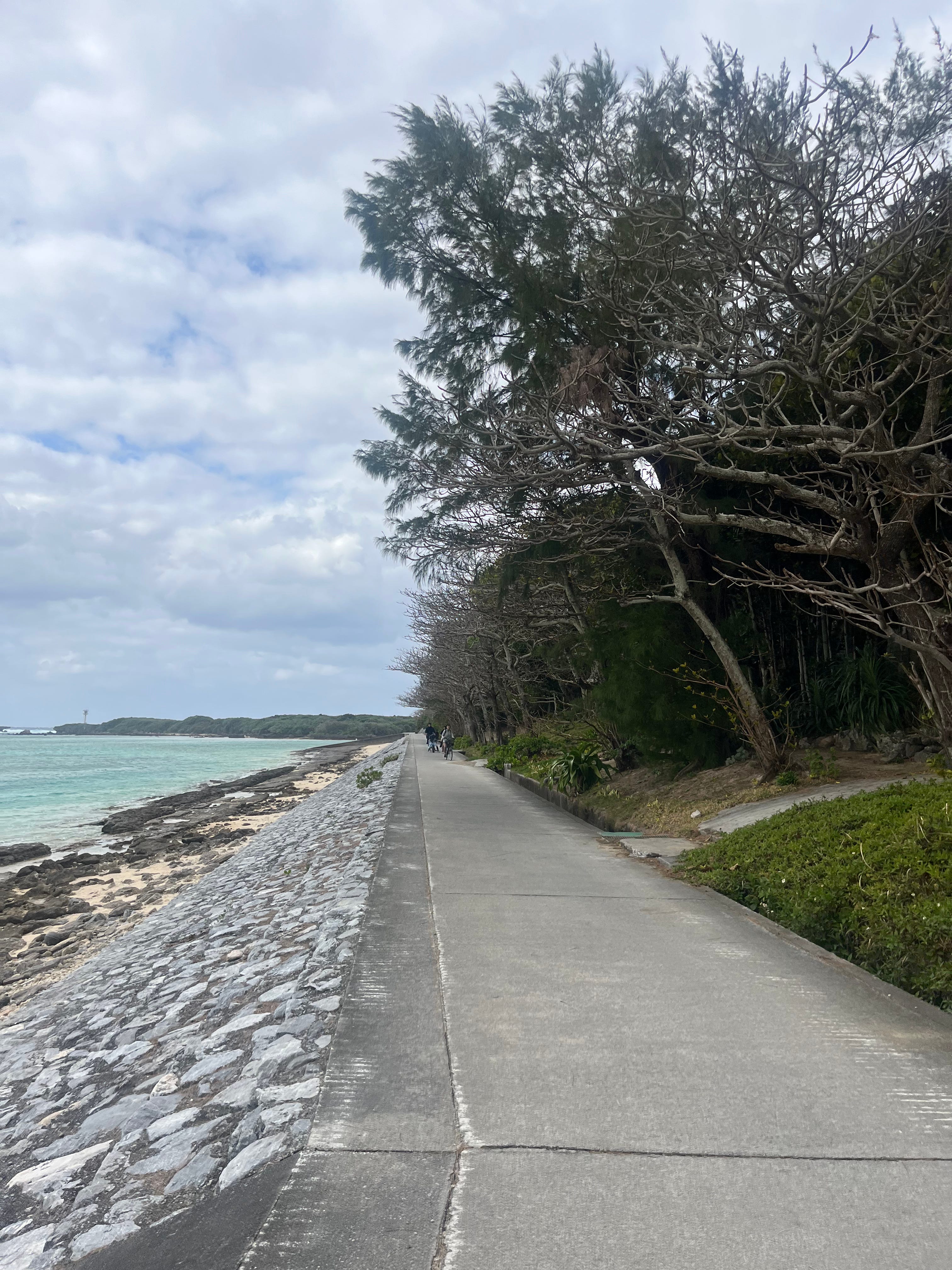
Unlike planned gardens or modern parks, this is an organic cultural environment — a place where people have lived with nature, not separated from it.
What You Experience at Fukugi Tree Tunnel
The moment you enter the tunnel, the atmosphere changes.
Sunlight filters softly through dense green leaves. The air feels slightly cooler. The sound of footsteps becomes louder than everything else.
There is no rush here.
You can walk, cycle, or simply stop and stand still — and the village continues around you as it always has.
The Feeling of Forest Bathing in Real Life
Without trying, your pace naturally slows down.
This is where many visitors experience what Japan calls shinrin-yoku — forest bathing.
Not as an activity, but as a state of being.
You begin to notice:
The rhythm of wind moving through leaves
The contrast between shadow and light
The absence of artificial sound
The emotional quiet that follows
It is not dramatic. It is subtle — and that is exactly why it works.
You can read more about shinrin-yoku here.

